Anti-profiteering obligations survive business demerger, complaint withdrawal, and customized supply arrangements where rate-reduction benefits are no...
Road restoration charges constitute taxable services when requested for commercial pipeline activity, requiring reverse-charge GST from the business r...
Interest on delayed release of requisitioned cash includes statutory pre-assessment interest and restitutionary compensation for unlawful post-assessm...
Incomplete inventory records justify rejecting accounts, while profit estimation requires relevant comparable material and interest falls under other ...
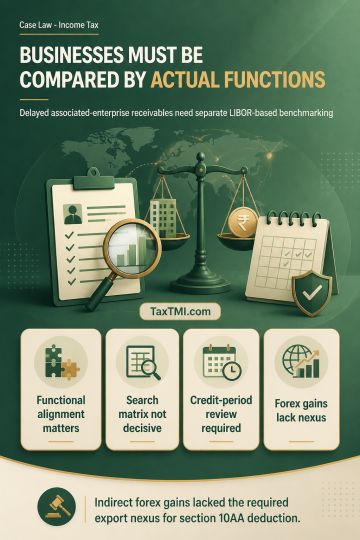
Transfer-pricing comparability requires functional alignment; delayed associated-enterprise receivables need separate LIBOR-based benchmarking, while ...
NCLAT held that a resolution plan was non-responsive where the earnest money deposit was not actually credited within the time required by the RFRP; debit of the bidder's account on the due date was insufficient, and the Resolution Professional erred in accepting the bid. The Tribunal also held that a dissenting financial creditor had locus to challenge the process because its objections had already been raised in CoC meetings and concerned alleged violations of the Code and value maximisation. Finding that the continuation of the CIRP against the corporate debtor and the role of the Resolution Professional required reassessment, the Tribunal set aside the impugned order, declared the Valentis plan invalid, and directed evaluation of the remaining plans and legal scrutiny of whether the CIRP still subsisted.
NCLAT held that a resolution plan was non-responsive where the earnest money deposit was not actually credited within the time required by the RFRP; debit of the bidder's account on the due date was insufficient, and the Resolution Professional erred in accepting the bid. The Tribunal also held that a dissenting financial creditor had locus to challenge the process because its objections had already been raised in CoC meetings and concerned alleged violations of the Code and value maximisation. Finding that the continuation of the CIRP against the corporate debtor and the role of the Resolution Professional required reassessment, the Tribunal set aside the impugned order, declared the Valentis plan invalid, and directed evaluation of the remaining plans and legal scrutiny of whether the CIRP still subsisted.
Note: It is a system-generated summary and is for quick reference only.
 TaxTMI
 TaxTMI

 of 4918