Capital-gains exemption for charitable trusts extends to qualifying fixed deposits, while unrecoverable TDS write-offs may constitute income applicati...
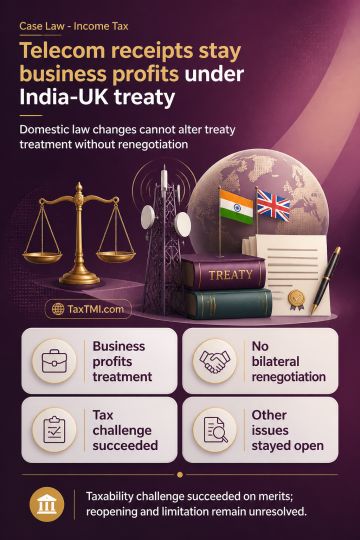
India-UK treaty characterisation of telecom-service receipts as business profits withstands unilateral domestic-law amendments for Indian tax purposes...
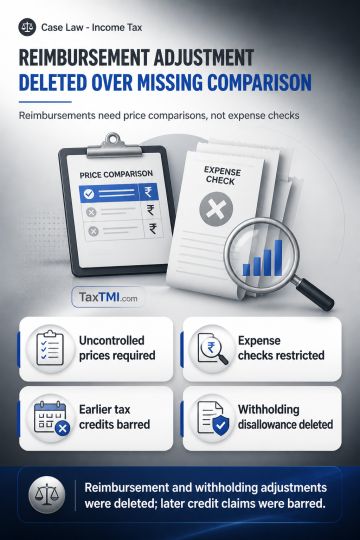
Transfer-pricing reimbursement adjustments require uncontrolled comparables and cannot become expense-genuineness reviews, resulting in deletion of th...
Page of 4881
Press 'Enter' after typing page number.
281 to 300 of 97618 Results
❮
❯
❯❯
0 / 200
Expand Note
Add to Folder
No Folders have been created
+
Are you sure you want to delete "My most important" ?
Mandatory pre-deposit under Section 107(6)(b) of the CGST Act is a statutory pre-condition to entertain an appeal; the clause requires depositing ten per cent of the remaining tax in dispute (subject to the statutory cap) before filing an appeal and contains no provision for an advance waiver. Consequently, the High Court lacks power to act as an appellate authority to relieve a litigant of that statutory pre-condition or to allow a writ to bypass it. The writ petition seeking such relief was held misconceived and dismissed for seeking to avoid the mandatory pre-deposit.
Mandatory pre-deposit under Section 107(6)(b) of the CGST Act is a statutory pre-condition to entertain an appeal; the clause requires depositing ten per cent of the remaining tax in dispute (subject to the statutory cap) before filing an appeal and contains no provision for an advance waiver. Consequently, the High Court lacks power to act as an appellate authority to relieve a litigant of that statutory pre-condition or to allow a writ to bypass it. The writ petition seeking such relief was held misconceived and dismissed for seeking to avoid the mandatory pre-deposit.
Note: It is a system-generated summary and is for quick reference only.
 TaxTMI
  TaxTMI
 of 4881