GST refunds for cancelled air tickets remain available when passenger reimbursements defeat unjust enrichment and credit-note adjustment is unavailabl...
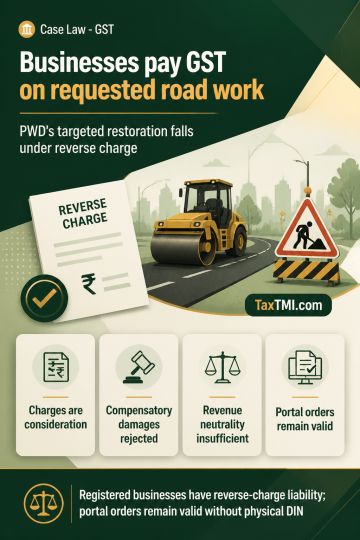
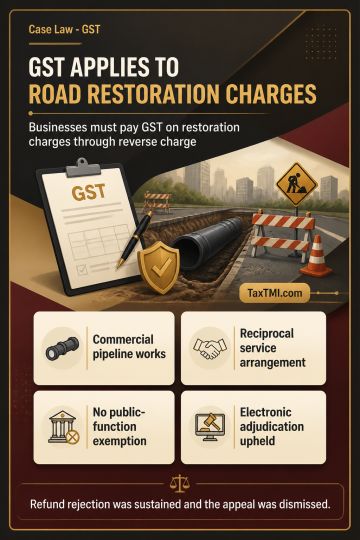
Request-driven road restoration attracts reverse-charge GST, not governmental-function treatment or compensatory-damages status for business recipient...
Road restoration charges for commercial pipeline works are taxable Government services, with reverse charge liability and no public-function exemption...
Persons who acquired or sold a secured asset during an operative moratorium were entitled to be heard because their substantive civil rights were exposed to adjudicatory scrutiny; the tribunal applied the principle that parties whose rights may be affected by ongoing proceedings are necessary and proper parties and may be impleaded to prevent collateral damage. On that basis both impleader applications were allowed, the applicants were directed to be impleaded as respondents, and the appellant was ordered to amend the memorandum of parties, serve appeal papers on them, and comply with specified timelines for objections and rejoinders.
Persons who acquired or sold a secured asset during an operative moratorium were entitled to be heard because their substantive civil rights were exposed to adjudicatory scrutiny; the tribunal applied the principle that parties whose rights may be affected by ongoing proceedings are necessary and proper parties and may be impleaded to prevent collateral damage. On that basis both impleader applications were allowed, the applicants were directed to be impleaded as respondents, and the appellant was ordered to amend the memorandum of parties, serve appeal papers on them, and comply with specified timelines for objections and rejoinders.
Note: It is a system-generated summary and is for quick reference only.
 TaxTMI
  TaxTMI
 of 4920