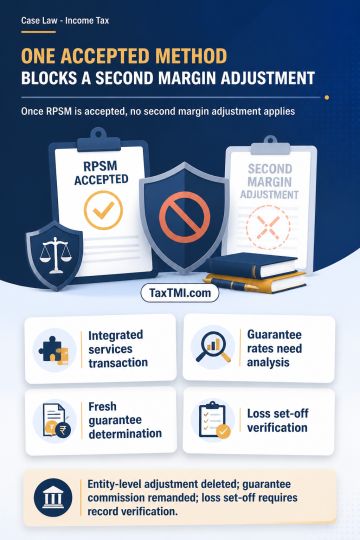
Form 26AS evidence requires successor-entity accounting verification after business transfer, while invoice-supported related-party advertising expend...
Money-laundering judgment timing requires awaiting the scheduled-offence decision despite continuation of the underlying trial where outcomes directly...
Accredited investor eligibility expands through securities-market exposure, while alternative investment fund disputes require prescribed resolution a...
Page of 4916
Press 'Enter' after typing page number.
41 to 60 of 98302 Results
❮
❯
❯❯
0 / 200
Expand Note
Add to Folder
No Folders have been created
+
Are you sure you want to delete "My most important" ?
The piece addresses the mandatory nature of a signature on reopening notices, explaining that the statutory use of "shall" requires signing even for electronic communications and that a deeming/authentication clause does not negate this obligation; consequently an unsigned notice is invalid and void ab initio. The legal effect is that an invalid notice cannot confer jurisdiction on the assessing officer to invoke reassessment under the reopening provisions, rendering any reassessment and downstream proceedings a nullity. The conclusion emphasises compliance with signature formalities as determinative of jurisdictional validity.
The piece addresses the mandatory nature of a signature on reopening notices, explaining that the statutory use of "shall" requires signing even for electronic communications and that a deeming/authentication clause does not negate this obligation; consequently an unsigned notice is invalid and void ab initio. The legal effect is that an invalid notice cannot confer jurisdiction on the assessing officer to invoke reassessment under the reopening provisions, rendering any reassessment and downstream proceedings a nullity. The conclusion emphasises compliance with signature formalities as determinative of jurisdictional validity.
Note: It is a system-generated summary and is for quick reference only.
 TaxTMI
 TaxTMI

 of 4916