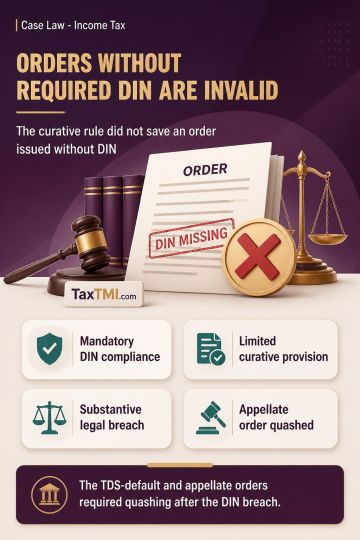
Document Identification Number compliance renders TDS-default orders invalid where mandatory DIN requirements are breached and curative provision does...
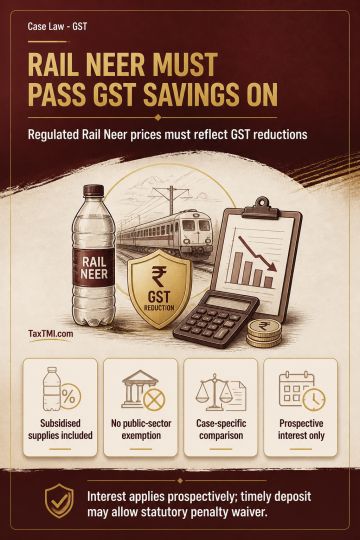
Anti-profiteering obligations survive business demerger, complaint withdrawal, and customized supply arrangements where rate-reduction benefits are no...
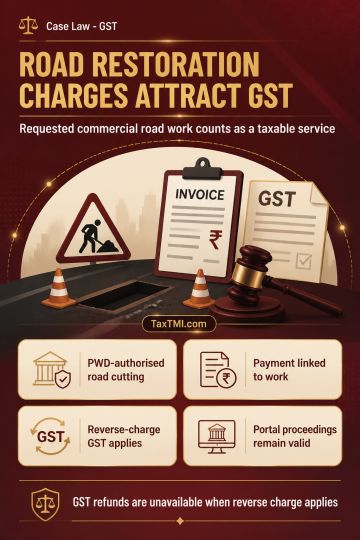
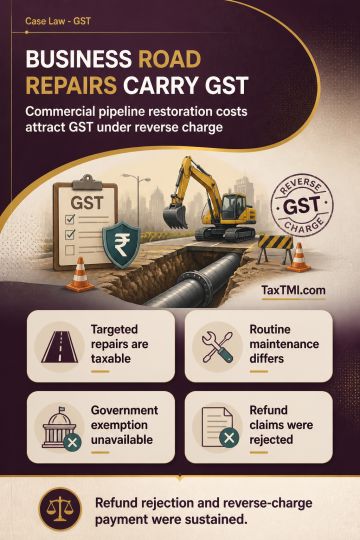
Road restoration charges constitute taxable services when requested for commercial pipeline activity, requiring reverse-charge GST from the business r...
The High Court held that the Appellate Tribunal under the CGST Act, read together (Sections 111-113), is bound by the CPC procedure, guided by principles of natural justice and has power to regulate its procedure; it also possesses civil court powers and may enforce orders as decrees. The Tribunal's jurisdiction to pass substantive orders necessarily includes inherent and incidental authority to grant interim relief, including stay of recovery pending appeal, to make the appellate remedy effective. The petitioner was directed to move the Tribunal within two weeks; limited interim protection was granted restraining action on the recovery notice until the Tribunal decides any interim application.
The High Court held that the Appellate Tribunal under the CGST Act, read together (Sections 111-113), is bound by the CPC procedure, guided by principles of natural justice and has power to regulate its procedure; it also possesses civil court powers and may enforce orders as decrees. The Tribunal's jurisdiction to pass substantive orders necessarily includes inherent and incidental authority to grant interim relief, including stay of recovery pending appeal, to make the appellate remedy effective. The petitioner was directed to move the Tribunal within two weeks; limited interim protection was granted restraining action on the recovery notice until the Tribunal decides any interim application.
Note: It is a system-generated summary and is for quick reference only.
 TaxTMI
  TaxTMI
 of 4913