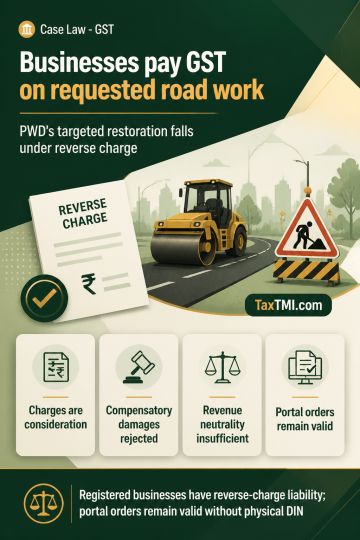
Request-driven road restoration attracts reverse-charge GST, not governmental-function treatment or compensatory-damages status for business recipient...
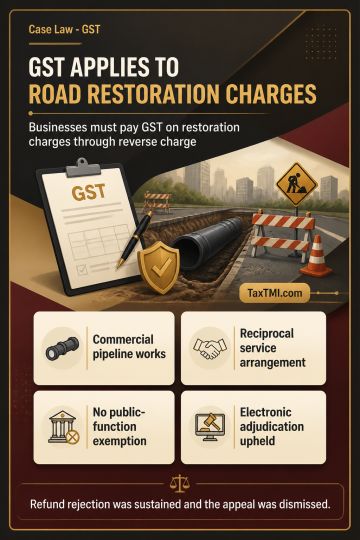
Road restoration charges for commercial pipeline works are taxable Government services, with reverse charge liability and no public-function exemption...
Model-wise import cap monitoring cannot justify withholding used multifunction machines where all-India tracking is absent and full security is furnis...
Sections 112(a), 112(b) and 114AA are characterised as onerous penalty provisions and require the department to make specific, pointed findings establishing serious violations and an intention to evade duty before imposing penalties; mere reliance on a retracted statement and bills of entry without detailing the petitioner's role, the false declaration attributed to them, or the value misdeclared is inadequate. Confiscation must operate as the predicate for penal liability. The document concludes that the existing order lacks substantive reasoned findings and directs a fresh hearing and a reasoned de novo adjudication with specific charges delineating the petitioner's role.
Sections 112(a), 112(b) and 114AA are characterised as onerous penalty provisions and require the department to make specific, pointed findings establishing serious violations and an intention to evade duty before imposing penalties; mere reliance on a retracted statement and bills of entry without detailing the petitioner's role, the false declaration attributed to them, or the value misdeclared is inadequate. Confiscation must operate as the predicate for penal liability. The document concludes that the existing order lacks substantive reasoned findings and directs a fresh hearing and a reasoned de novo adjudication with specific charges delineating the petitioner's role.
Note: It is a system-generated summary and is for quick reference only.
 TaxTMI
  TaxTMI
 of 4912