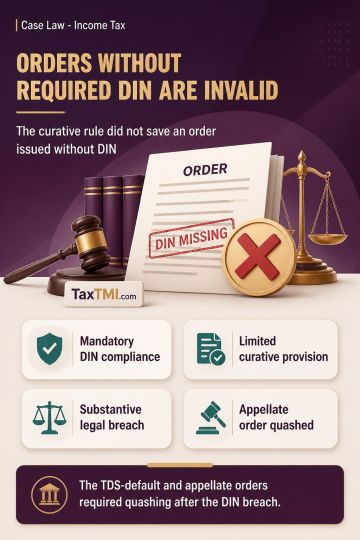
Document Identification Number compliance renders TDS-default orders invalid where mandatory DIN requirements are breached and curative provision does...
Under GST rules a revocation application requires prior filing of returns and payment of dues; limitation exists to ensure statutory compliance and protect third party rights, but cancellation of GST registration typically prejudices only the assessee and not third parties. The writ court may condone delay in statutory or quasi judicial proceedings, and on that basis the High Court set aside the dismissal of the appeal for limitation and directed the Appellate Authority to re hear and decide the revocation of cancellation on merits, permitting reconsideration rather than rejection on time bar grounds.
Under GST rules a revocation application requires prior filing of returns and payment of dues; limitation exists to ensure statutory compliance and protect third party rights, but cancellation of GST registration typically prejudices only the assessee and not third parties. The writ court may condone delay in statutory or quasi judicial proceedings, and on that basis the High Court set aside the dismissal of the appeal for limitation and directed the Appellate Authority to re hear and decide the revocation of cancellation on merits, permitting reconsideration rather than rejection on time bar grounds.
Note: It is a system-generated summary and is for quick reference only.
 TaxTMI
  TaxTMI
 of 4918