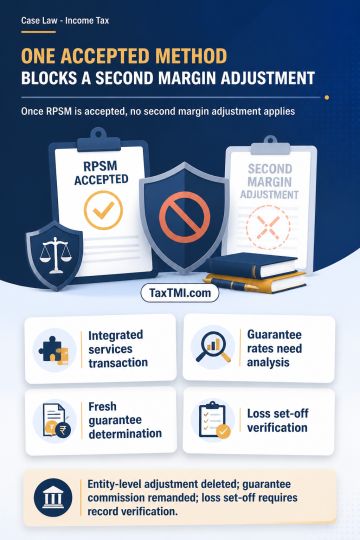
Form 26AS evidence requires successor-entity accounting verification after business transfer, while invoice-supported related-party advertising expend...
Money-laundering judgment timing requires awaiting the scheduled-offence decision despite continuation of the underlying trial where outcomes directly...
Accredited investor eligibility expands through securities-market exposure, while alternative investment fund disputes require prescribed resolution a...
Page of 4916
Press 'Enter' after typing page number.
41 to 60 of 98302 Results
❮
❯
❯❯
0 / 200
Expand Note
Add to Folder
No Folders have been created
+
Are you sure you want to delete "My most important" ?
Failure to discharge obligations under Regulation 17(9) raised two legal issues: whether the penalty imposed was excessive and whether security deposit could be forfeited. The Tribunal held that Regulations 8(1) and 20 fix the statutory penalty ceiling at Rs.50,000, so imposing the maximum permitted cannot be treated as disproportionate; and the CBLR does not authorize forfeiture of the security deposit. Applying those statutory prescriptions, the impugned order imposing the maximum permissible penalty and not forfeiting the deposit was found valid, and the revenue's appeal was dismissed. - CESTAT
Failure to discharge obligations under Regulation 17(9) raised two legal issues: whether the penalty imposed was excessive and whether security deposit could be forfeited. The Tribunal held that Regulations 8(1) and 20 fix the statutory penalty ceiling at Rs.50,000, so imposing the maximum permitted cannot be treated as disproportionate; and the CBLR does not authorize forfeiture of the security deposit. Applying those statutory prescriptions, the impugned order imposing the maximum permissible penalty and not forfeiting the deposit was found valid, and the revenue's appeal was dismissed. - CESTAT
Note: It is a system-generated summary and is for quick reference only.
 TaxTMI
 TaxTMI

 of 4916