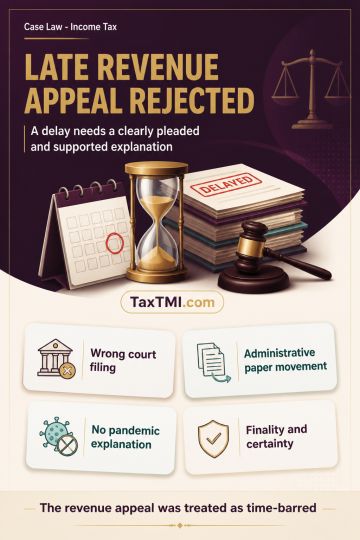
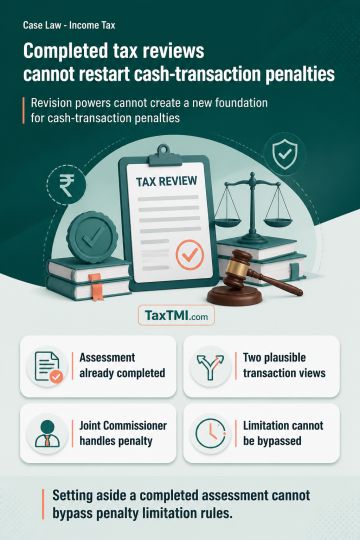
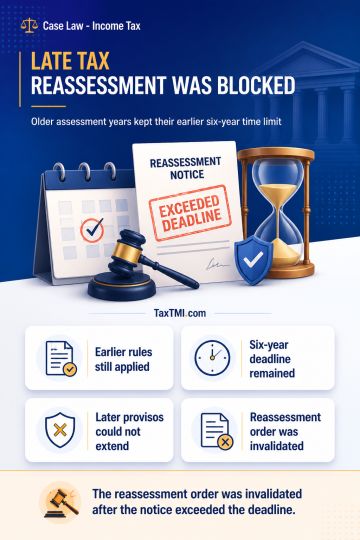
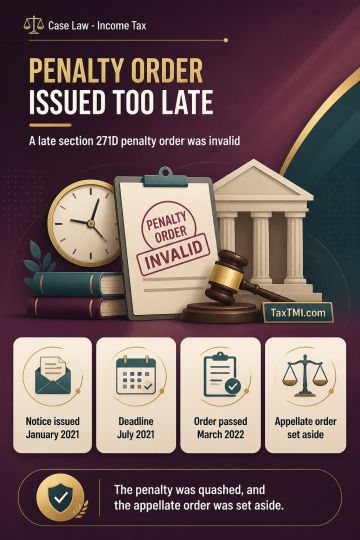
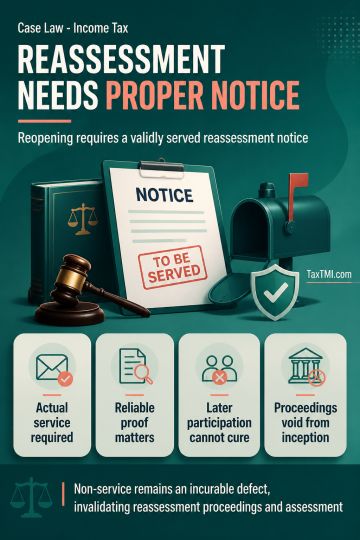
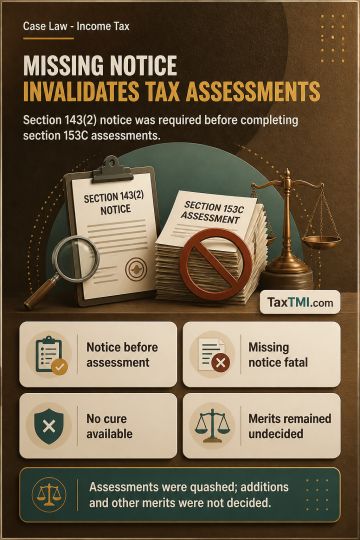
Pre-amendment reassessment limitation bars late notices under the preserved regime, invalidating consequential reassessment for affected earlier asses...
Cash-sales explanations for bank deposits require documentary reconciliation; reassessment notice survived where effective response time was available...
Functional comparability in transfer pricing prevents ad hoc arm's length adjustments where functions, assets, risks and reliable comparables are unes...
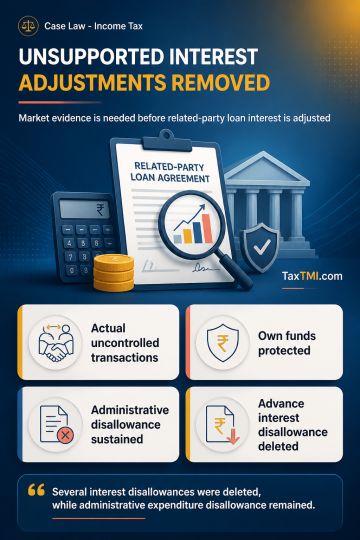
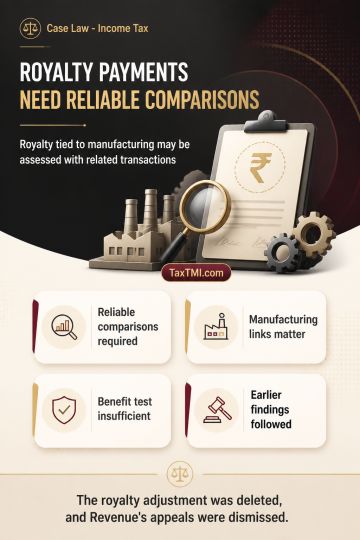
Contingency expenses, exempt-income disallowance, and royalty benchmarking: unsupported adjustments were deleted under consistent accounting and trans...
Page of 4920
Press 'Enter' after typing page number.
61 to 80 of 98394 Results
❮
❯
❯❯
0 / 200
Expand Note
Add to Folder
No Folders have been created
+
Are you sure you want to delete "My most important" ?
An individual's residential status for AY 2020-21 was determined under s.6(1)(c) as the individual exceeded both thresholds (≥365 days in preceding four years and ≥60 days in the relevant year), and the relaxation to 182 days under Explanation 1(a)/(b) was held inapplicable because it is confined to specified cases (leaving India or non-residents "being outside India") and cannot be extended to ordinary visits; accordingly, the individual was held resident in India. Applying Article 4 India-Singapore DTAA, the "permanent home/centre of vital interests" and habitual abode factors showed closer economic ties with India, and nationality also supported India; treaty tie-breaker therefore treated the individual as India resident. Objection to jurisdiction based on s.143(2) notice issuance was rejected due to participation in assessment proceedings. - ITAT
An individual's residential status for AY 2020-21 was determined under s.6(1)(c) as the individual exceeded both thresholds (≥365 days in preceding four years and ≥60 days in the relevant year), and the relaxation to 182 days under Explanation 1(a)/(b) was held inapplicable because it is confined to specified cases (leaving India or non-residents "being outside India") and cannot be extended to ordinary visits; accordingly, the individual was held resident in India. Applying Article 4 India-Singapore DTAA, the "permanent home/centre of vital interests" and habitual abode factors showed closer economic ties with India, and nationality also supported India; treaty tie-breaker therefore treated the individual as India resident. Objection to jurisdiction based on s.143(2) notice issuance was rejected due to participation in assessment proceedings. - ITAT
Note: It is a system-generated summary and is for quick reference only.
 TaxTMI
 TaxTMI

 of 4920