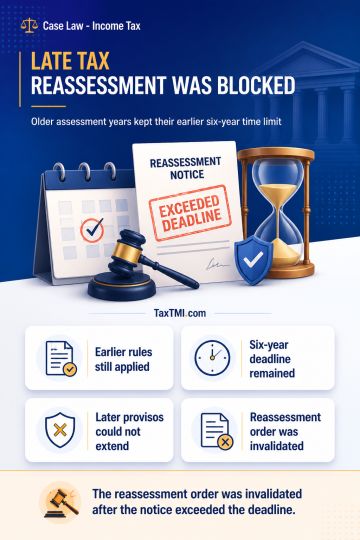
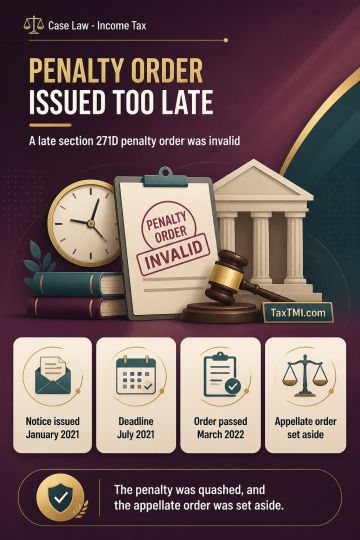
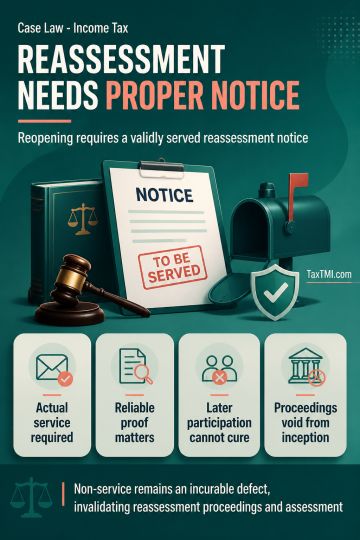
Pre-amendment reassessment limitation bars late notices under the preserved regime, invalidating consequential reassessment for affected earlier asses...
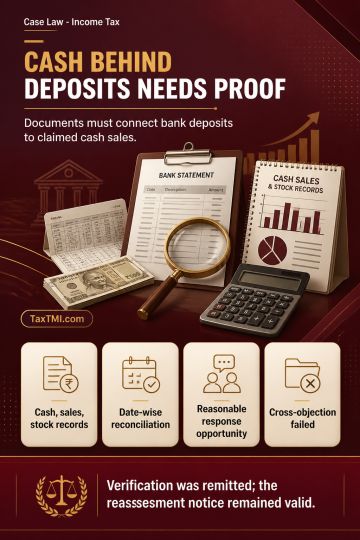
Cash-sales explanations for bank deposits require documentary reconciliation; reassessment notice survived where effective response time was available...
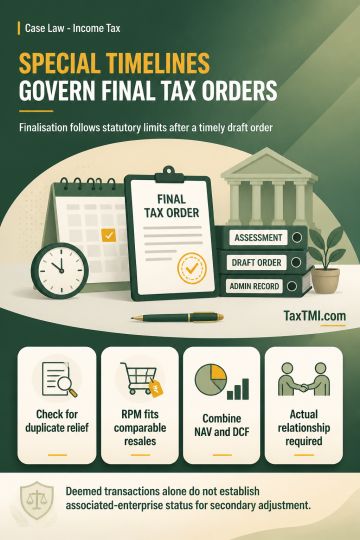
Functional comparability in transfer pricing prevents ad hoc arm's length adjustments where functions, assets, risks and reliable comparables are unes...
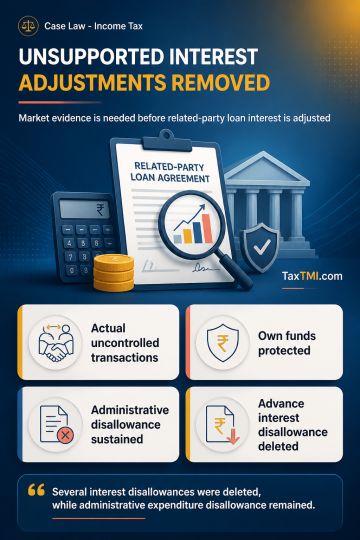
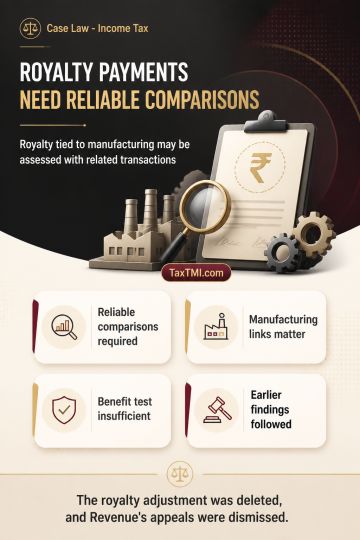
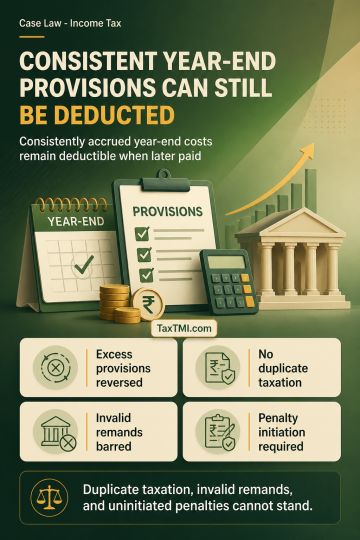
Contingency expenses, exempt-income disallowance, and royalty benchmarking: unsupported adjustments were deleted under consistent accounting and trans...
Disallowance under s.14A r.w. Rule 8D(2)(ii) was held impermissible because the assessee established availability of surplus own funds for making investments yielding exempt income; hence no interest disallowance could be attributed to such investments, and the disallowance was deleted. Disallowance under Rule 8D(2)(iii) was held untenable absent the AO's recorded objective satisfaction, as mandated by s.14A and settled law; the direction to recompute based on proper satisfaction was sustained. Sales tax and power subsidies were treated as capital receipts since the dominant purpose was industrial development and employment generation; addition to book profit u/s 115JB was rejected. Additional depreciation and bad-debt write-off/provision treatment (including under MAT) were allowed, and carry-forward of amalgamating company's LTC loss was upheld per the approved amalgamation scheme, resulting in dismissal of Revenue's grounds and partial dismissal of assessee's appeal. - ITAT
Disallowance under s.14A r.w. Rule 8D(2)(ii) was held impermissible because the assessee established availability of surplus own funds for making investments yielding exempt income; hence no interest disallowance could be attributed to such investments, and the disallowance was deleted. Disallowance under Rule 8D(2)(iii) was held untenable absent the AO's recorded objective satisfaction, as mandated by s.14A and settled law; the direction to recompute based on proper satisfaction was sustained. Sales tax and power subsidies were treated as capital receipts since the dominant purpose was industrial development and employment generation; addition to book profit u/s 115JB was rejected. Additional depreciation and bad-debt write-off/provision treatment (including under MAT) were allowed, and carry-forward of amalgamating company's LTC loss was upheld per the approved amalgamation scheme, resulting in dismissal of Revenue's grounds and partial dismissal of assessee's appeal. - ITAT
Note: It is a system-generated summary and is for quick reference only.
 TaxTMI
 TaxTMI

 of 4921