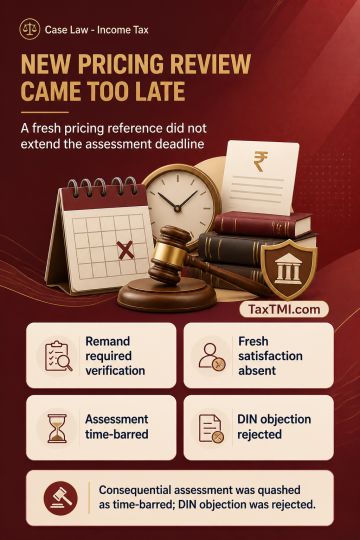
Limitation after transfer-pricing remand: fresh TPO reference did not extend the assessment deadline, rendering the consequential assessment time-barr...
Interim judicial restraint on tax deduction prevents default, while supporting reasonable cause and penalty deletion for foreign-leg LFC reimbursement...
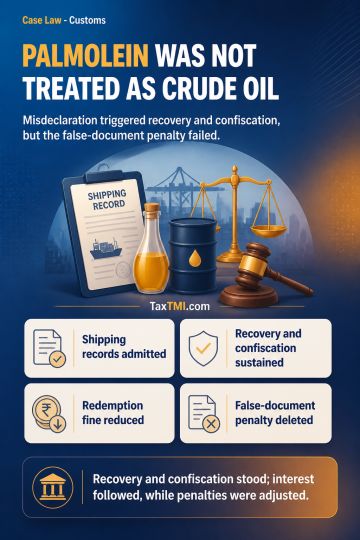
Palmolein classification defeated the crude-oil concession; material misdeclaration sustained recovery and confiscation, while separate false-document...
The dominant issue was whether revision under s.263 was justified where the AO, after finding purchases to be bogus and goods not received, made disallowance under s.37(1) instead of invoking s.69C read with s.115BBE. Since s.69C applies where an expenditure is claimed but the assessee fails to satisfactorily explain its source, and the factual findings showed the expenditure was unexplained and unsupported by evidence of receipt of goods, the statutory preconditions for s.69C were met. The AO's resort to s.37(1), absent any controversy on commercial expediency, rendered the assessment erroneous and prejudicial to revenue; the revisionary directions were sustained and the assessee's challenge was rejected - ITAT
The dominant issue was whether revision under s.263 was justified where the AO, after finding purchases to be bogus and goods not received, made disallowance under s.37(1) instead of invoking s.69C read with s.115BBE. Since s.69C applies where an expenditure is claimed but the assessee fails to satisfactorily explain its source, and the factual findings showed the expenditure was unexplained and unsupported by evidence of receipt of goods, the statutory preconditions for s.69C were met. The AO's resort to s.37(1), absent any controversy on commercial expediency, rendered the assessment erroneous and prejudicial to revenue; the revisionary directions were sustained and the assessee's challenge was rejected - ITAT
Note: It is a system-generated summary and is for quick reference only.
 TaxTMI
  TaxTMI
 of 4891