Faceless assessment safeguards require requested personal hearings and adequate final show-cause response time, failing which reassessment is required...
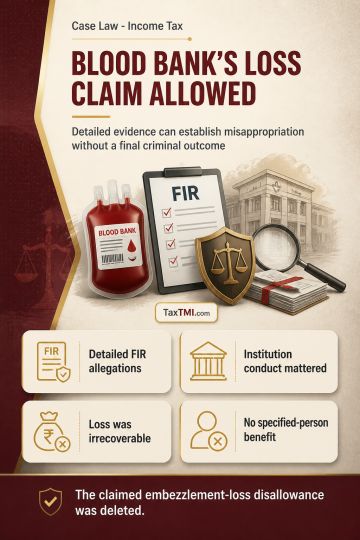
Embezzlement losses in charitable institutions remain allowable when misappropriation is established, irrecoverable, and not a specified-person benefi...
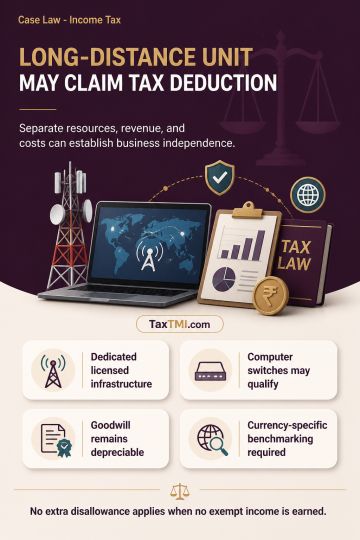
National long-distance undertaking status supports deduction where separately licensed infrastructure, resources, revenue, and expenditure establish c...
Agency reimbursement income follows contractual deposit-liability computation, while pending deposit collections do not constitute deemed-dividend loa...
Penalty under s. 270A(1) r/w s. 270A(9)(c) for alleged false expense claims was examined where the underlying addition comprised an ad hoc disallowance sustained at 20% on an estimated basis. Since the income adjustment was purely estimative and did not meet the statutory parameters of "under-reported income" warranting penal consequences, and the AO had not recorded the requisite satisfaction to justify levy under s. 270A, the penalty was held arbitrary and void ab initio. Penalty was quashed and the appeal was allowed. - ITAT
Penalty under s. 270A(1) r/w s. 270A(9)(c) for alleged false expense claims was examined where the underlying addition comprised an ad hoc disallowance sustained at 20% on an estimated basis. Since the income adjustment was purely estimative and did not meet the statutory parameters of "under-reported income" warranting penal consequences, and the AO had not recorded the requisite satisfaction to justify levy under s. 270A, the penalty was held arbitrary and void ab initio. Penalty was quashed and the appeal was allowed. - ITAT
Note: It is a system-generated summary and is for quick reference only.
 TaxTMI
  TaxTMI
 of 4884