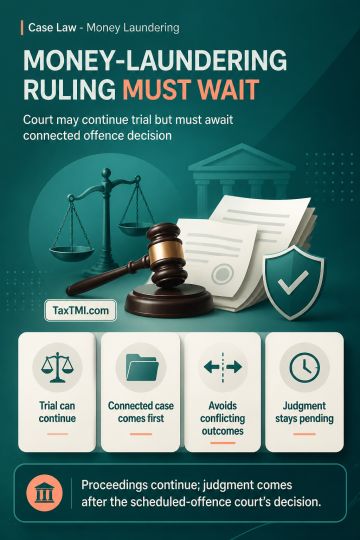
Money-laundering judgment timing requires awaiting the scheduled-offence decision despite continuation of the underlying trial where outcomes directly...
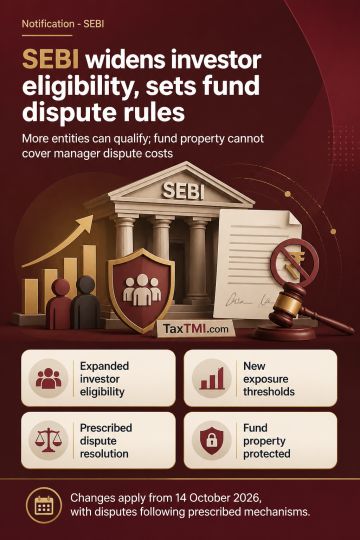
Accredited investor eligibility expands through securities-market exposure, while alternative investment fund disputes require prescribed resolution a...
Customs Assessment Portal centralises classification and valuation guidance to support consistent, transparent and informed compliance across stakehol...
The dominant issue was whether a single mortgage deed securing repayment under multiple loan agreements attracted stamp duty under Section 4 (one transaction) or Section 5 (several distinct matters) of the Stamp Act. The court held Section 4 requires commonality of a single transaction, whereas Section 5 applies where distinct transactions are embodied in one instrument, requiring aggregate duty as if separate instruments existed. As the four loan agreements imposed separate obligations and constituted independent transactions, execution of one consolidated mortgage deed could not convert them into a common transaction; duty was correctly assessed separately for each loan, along with deficit consequences. The challenge to the revisional order was rejected and the petition was dismissed. - HC
The dominant issue was whether a single mortgage deed securing repayment under multiple loan agreements attracted stamp duty under Section 4 (one transaction) or Section 5 (several distinct matters) of the Stamp Act. The court held Section 4 requires commonality of a single transaction, whereas Section 5 applies where distinct transactions are embodied in one instrument, requiring aggregate duty as if separate instruments existed. As the four loan agreements imposed separate obligations and constituted independent transactions, execution of one consolidated mortgage deed could not convert them into a common transaction; duty was correctly assessed separately for each loan, along with deficit consequences. The challenge to the revisional order was rejected and the petition was dismissed. - HC
Note: It is a system-generated summary and is for quick reference only.
 TaxTMI
  TaxTMI
 of 4918