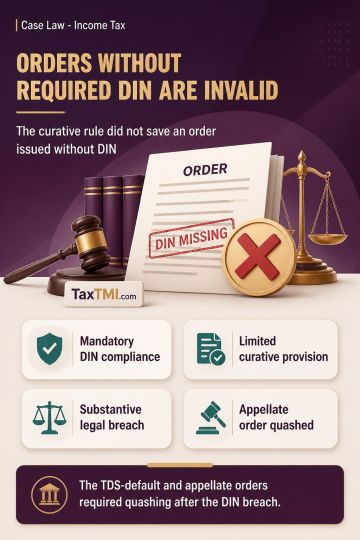
Document Identification Number compliance renders TDS-default orders invalid where mandatory DIN requirements are breached and curative provision does...
SC held that Section 44C applies to all "head office expenditure" of a non-resident, whether common or incurred exclusively for Indian branches, thereby subjecting such expenditure to the statutory ceiling. It rejected the restrictive construction excluding exclusive expenditure and disapproved the contrary view of the Bombay HC in Emirates Commercial Bank as not laying down the correct law. SC clarified that the statutory Explanation, read with the mischief rule, is broad and inclusive, and the term "attributable" does not create a common/exclusive dichotomy. The question of law was answered in favour of the Revenue, and the matters were remanded to ITAT for limited verification under the tripartite test.
SC held that Section 44C applies to all "head office expenditure" of a non-resident, whether common or incurred exclusively for Indian branches, thereby subjecting such expenditure to the statutory ceiling. It rejected the restrictive construction excluding exclusive expenditure and disapproved the contrary view of the Bombay HC in Emirates Commercial Bank as not laying down the correct law. SC clarified that the statutory Explanation, read with the mischief rule, is broad and inclusive, and the term "attributable" does not create a common/exclusive dichotomy. The question of law was answered in favour of the Revenue, and the matters were remanded to ITAT for limited verification under the tripartite test.
Note: It is a system-generated summary and is for quick reference only.
 TaxTMI
  TaxTMI
 of 4916