Form 26AS evidence requires successor-entity accounting verification after business transfer, while invoice-supported related-party advertising expend...
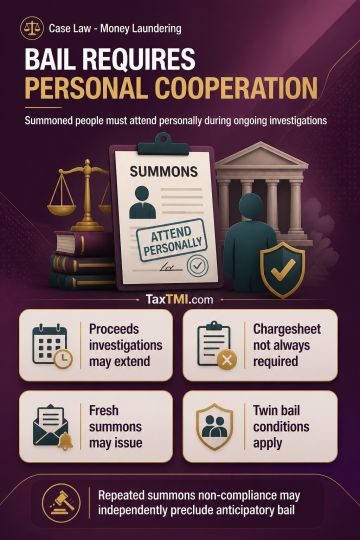
Money-laundering judgment timing requires awaiting the scheduled-offence decision despite continuation of the underlying trial where outcomes directly...
Accredited investor eligibility expands through securities-market exposure, while alternative investment fund disputes require prescribed resolution a...
Customs Assessment Portal centralises classification and valuation guidance to support consistent, transparent and informed compliance across stakehol...
Page of 4918
Press 'Enter' after typing page number.
101 to 120 of 98359 Results
❮
❯
❯❯
0 / 200
Expand Note
Add to Folder
No Folders have been created
+
Are you sure you want to delete "My most important" ?
CESTAT held that the imported "ethylene ripener" containing ethephon is an "insecticide" under Section 3(e) of the Insecticide Act, 1968, as ethephon is listed in its Schedule. Even if imported for non-insecticidal use, DGFT Notification No. 106/(RE-2013)/2009-2014 validly mandates an import permit from the Registration Committee, which the importers failed to obtain despite their undertaking before the Bombay HC. The goods, imported in violation of the notification and misdeclared to circumvent restrictions, were rightly held liable to confiscation under Section 111(d), (f) and (m) of the Customs Act, 1962, with an option of re-export, failing which absolute confiscation and destruction would follow. Penalties under Sections 112(a) and 114AA on all appellants, including the customs broker, were upheld. The appeals were dismissed.
CESTAT held that the imported "ethylene ripener" containing ethephon is an "insecticide" under Section 3(e) of the Insecticide Act, 1968, as ethephon is listed in its Schedule. Even if imported for non-insecticidal use, DGFT Notification No. 106/(RE-2013)/2009-2014 validly mandates an import permit from the Registration Committee, which the importers failed to obtain despite their undertaking before the Bombay HC. The goods, imported in violation of the notification and misdeclared to circumvent restrictions, were rightly held liable to confiscation under Section 111(d), (f) and (m) of the Customs Act, 1962, with an option of re-export, failing which absolute confiscation and destruction would follow. Penalties under Sections 112(a) and 114AA on all appellants, including the customs broker, were upheld. The appeals were dismissed.
Note: It is a system-generated summary and is for quick reference only.
 TaxTMI
  TaxTMI
 of 4918