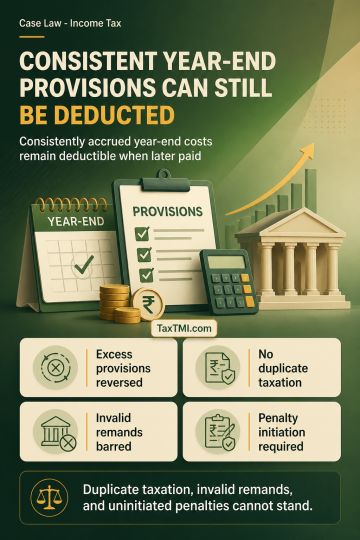
Contingency expenses, exempt-income disallowance, and royalty benchmarking: unsupported adjustments were deleted under consistent accounting and trans...
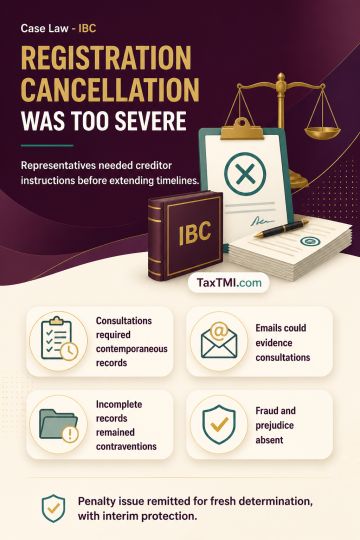
Disciplinary proportionality requires penalties for Authorised Representative misconduct to match proven harm, leading to reconsideration of registrat...
ITAT dismissed the assessee's appeal and upheld the PCIT's revisional order u/s 263. It held that the reassessment order dated 30.03.2023 was an "order" independent of the original assessment and was within the limitation period prescribed in s.263(2), hence not barred by limitation. Adequate opportunity of hearing was found to have been afforded through multiple notices and written submissions, satisfying the requirement of s.263, including by electronic mode as per s.2(23C). The AO's failure to disallow delayed employees' PF/ESI contributions, contrary to s.36(1)(va) and binding precedent, rendered the reassessment order both erroneous and prejudicial to the revenue. The ground on customs duty fine/penalty was not pressed and stood rejected.
ITAT dismissed the assessee's appeal and upheld the PCIT's revisional order u/s 263. It held that the reassessment order dated 30.03.2023 was an "order" independent of the original assessment and was within the limitation period prescribed in s.263(2), hence not barred by limitation. Adequate opportunity of hearing was found to have been afforded through multiple notices and written submissions, satisfying the requirement of s.263, including by electronic mode as per s.2(23C). The AO's failure to disallow delayed employees' PF/ESI contributions, contrary to s.36(1)(va) and binding precedent, rendered the reassessment order both erroneous and prejudicial to the revenue. The ground on customs duty fine/penalty was not pressed and stood rejected.
Note: It is a system-generated summary and is for quick reference only.
 TaxTMI
 TaxTMI

 of 4918