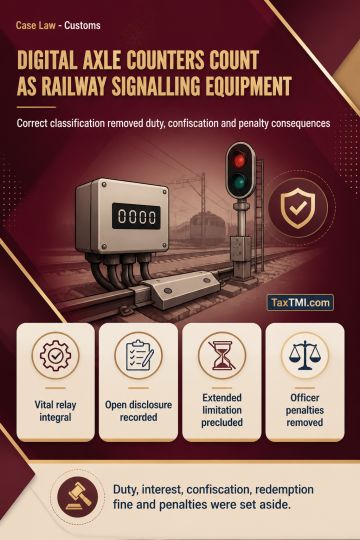
Tariff classification of Digital Axle Counters affirmed as electro-mechanical railway signalling equipment, eliminating duty, confiscation and penalty...
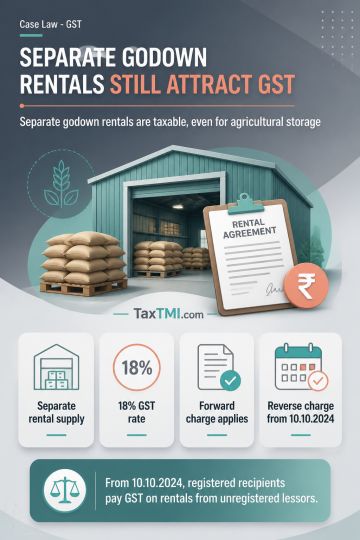
AAR held that renting of residential dwellings by unregistered landlords to the applicant, a registered entity, constitutes a taxable supply of services to the applicant under GST. The employer-employee relationship applies only between the applicant and its employees, not between the landlords and the applicant; therefore, the exemption for residential dwelling services is inapplicable. Consequently, GST is payable by the applicant under the Reverse Charge Mechanism on rent paid to unregistered landlords. Further, AAR held that, in view of s.17(2) read with s.2(47), the applicant is not eligible to claim ITC on GST paid under reverse charge, as the corresponding outward supply to employees is an exempt supply.
AAR held that renting of residential dwellings by unregistered landlords to the applicant, a registered entity, constitutes a taxable supply of services to the applicant under GST. The employer-employee relationship applies only between the applicant and its employees, not between the landlords and the applicant; therefore, the exemption for residential dwelling services is inapplicable. Consequently, GST is payable by the applicant under the Reverse Charge Mechanism on rent paid to unregistered landlords. Further, AAR held that, in view of s.17(2) read with s.2(47), the applicant is not eligible to claim ITC on GST paid under reverse charge, as the corresponding outward supply to employees is an exempt supply.
Note: It is a system-generated summary and is for quick reference only.
 TaxTMI
  TaxTMI
 of 4881