Food import sampling requirements support provisional release where unseized consignments conform to standards and raw areca classification is unestab...
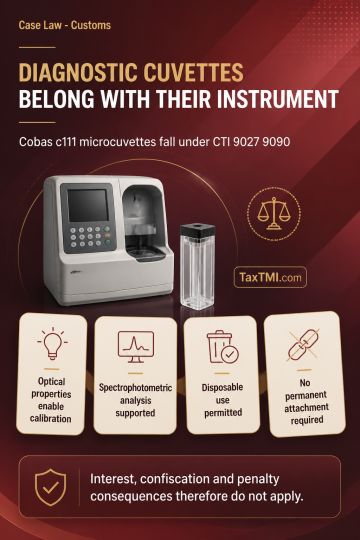
Diagnostic microcuvette classification follows sole-use analytical function, placing specialised disposable cuvettes with their analyser rather than g...
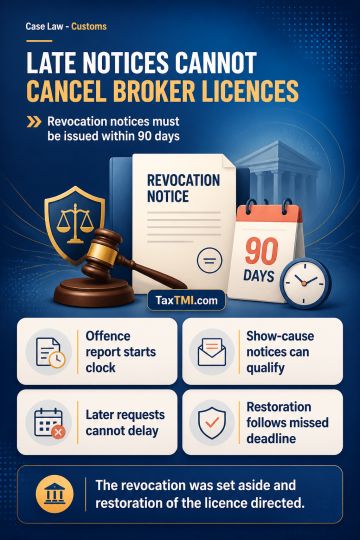
Customs Broker licensing proceedings fail when their offence-report foundation collapses and authorisation, advisory, and KYC duties remain unbreached...
AAR held that renting of residential dwellings by unregistered landlords to the applicant, a registered entity, constitutes a taxable supply of services to the applicant under GST. The employer-employee relationship applies only between the applicant and its employees, not between the landlords and the applicant; therefore, the exemption for residential dwelling services is inapplicable. Consequently, GST is payable by the applicant under the Reverse Charge Mechanism on rent paid to unregistered landlords. Further, AAR held that, in view of s.17(2) read with s.2(47), the applicant is not eligible to claim ITC on GST paid under reverse charge, as the corresponding outward supply to employees is an exempt supply.
AAR held that renting of residential dwellings by unregistered landlords to the applicant, a registered entity, constitutes a taxable supply of services to the applicant under GST. The employer-employee relationship applies only between the applicant and its employees, not between the landlords and the applicant; therefore, the exemption for residential dwelling services is inapplicable. Consequently, GST is payable by the applicant under the Reverse Charge Mechanism on rent paid to unregistered landlords. Further, AAR held that, in view of s.17(2) read with s.2(47), the applicant is not eligible to claim ITC on GST paid under reverse charge, as the corresponding outward supply to employees is an exempt supply.
Note: It is a system-generated summary and is for quick reference only.
 TaxTMI
  TaxTMI
 of 4881