Mandatory textile export qualifiers distinguish flame-retardant fabrics from other listed fabrics for automated identification under the textiles ince...
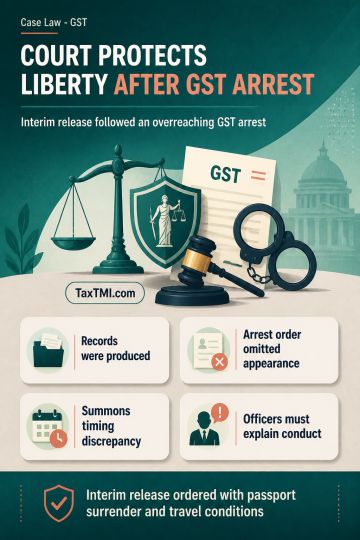
Personal liberty safeguards restrict arrest after court-directed GST appearance, requiring interim release where authorities overreach pending proceed...
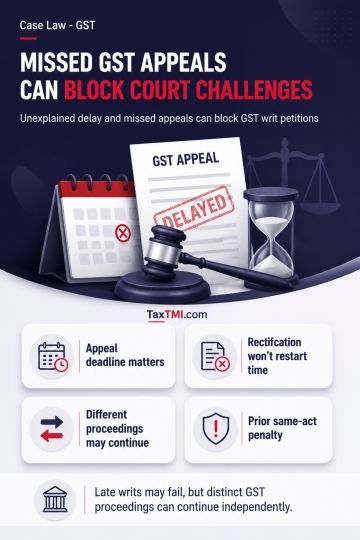
Alternative statutory remedy and delay bar GST writ challenges despite pending rectification, while distinct subject matter permits parallel proceedin...
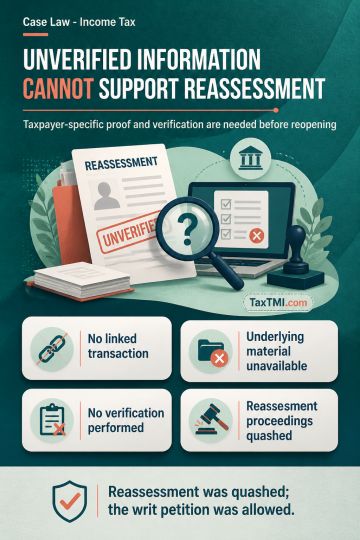
Unverified Insight Portal Information Cannot Justify Reassessment Without a Verified Taxpayer-Specific Income-Escape Nexus or Demonstrated Application...
Assessing Officer jurisdiction after statutory transfer invalidates reassessment notices issued by transferor officers and nullifies resulting proceed...
Page of 4883
Press 'Enter' after typing page number.
261 to 280 of 97649 Results
❮
❯
❯❯
0 / 200
Expand Note
Add to Folder
No Folders have been created
+
Are you sure you want to delete "My most important" ?
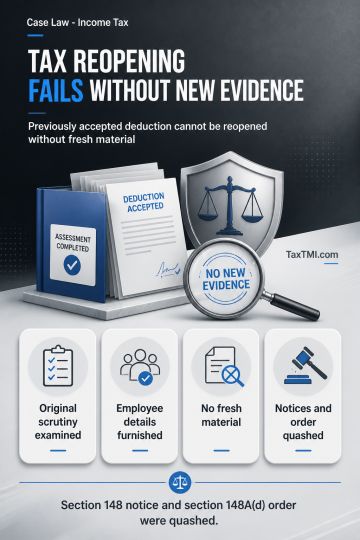
HC held that the assessee was not entitled to special deduction under s.42 for the relevant assessment year. Relying on the Production Sharing Contract (PSC), HC affirmed that tax authorities are bound strictly by the contractual stipulations and cannot rely on external understandings or prior correspondence, as these are superseded by Article 32, which mandates written amendment signed by all parties. Consequently, the AO correctly denied the deduction under s.42. On reopening, HC held that the reassessment was valid, as there had been no prior scrutiny or examination of the s.42 deduction in the original assessment and hence the reopening could not be characterised as a mere change of opinion. In view of this, HC declined to interfere with the reassessment and upheld the Revenue's position.
HC held that the assessee was not entitled to special deduction under s.42 for the relevant assessment year. Relying on the Production Sharing Contract (PSC), HC affirmed that tax authorities are bound strictly by the contractual stipulations and cannot rely on external understandings or prior correspondence, as these are superseded by Article 32, which mandates written amendment signed by all parties. Consequently, the AO correctly denied the deduction under s.42. On reopening, HC held that the reassessment was valid, as there had been no prior scrutiny or examination of the s.42 deduction in the original assessment and hence the reopening could not be characterised as a mere change of opinion. In view of this, HC declined to interfere with the reassessment and upheld the Revenue's position.
Note: It is a system-generated summary and is for quick reference only.
 TaxTMI
  TaxTMI
 of 4883