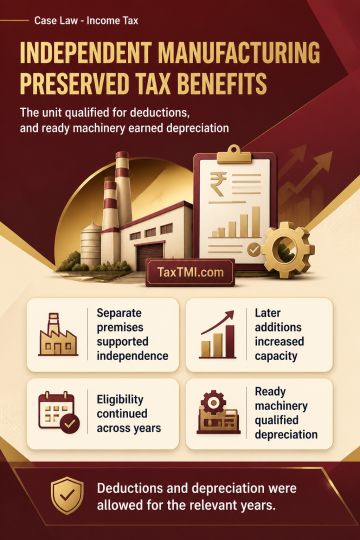
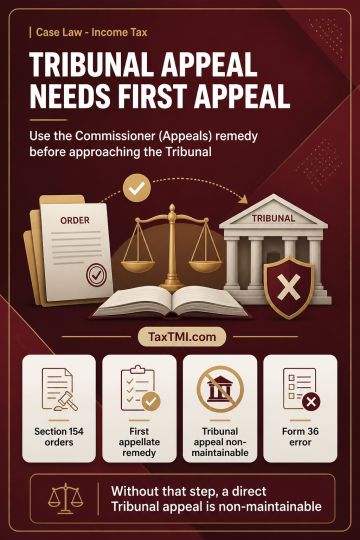
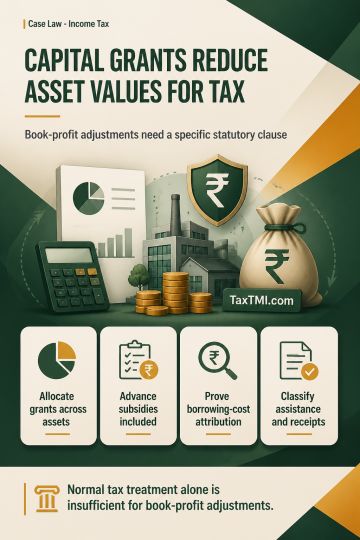
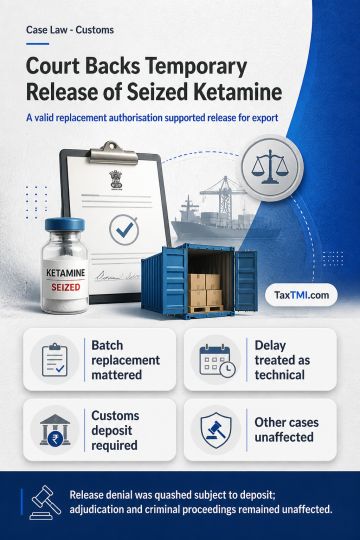
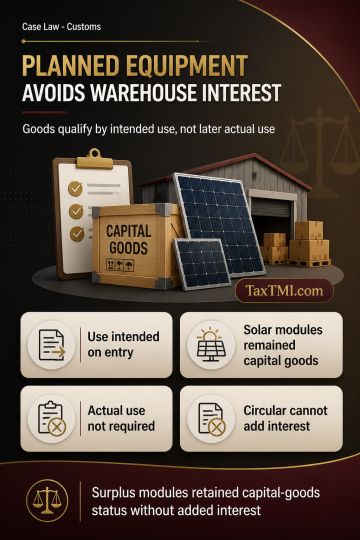
Independent manufacturing undertaking eligibility preserves Section 80IA/80IB deductions, while machinery kept ready for use qualifies for depreciatio...
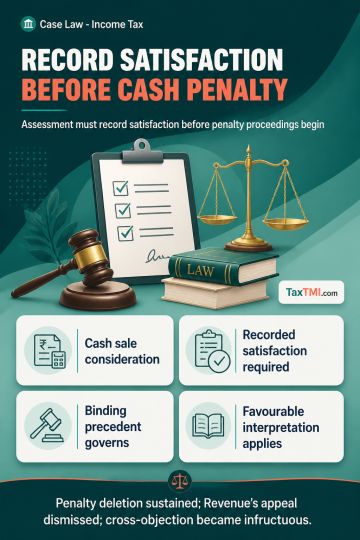
Assessing Officer Satisfaction Requirement Bars Penalty for Cash Receipt in Immovable-Property Sale Cases Where Initiation Lacks Recorded Satisfaction...
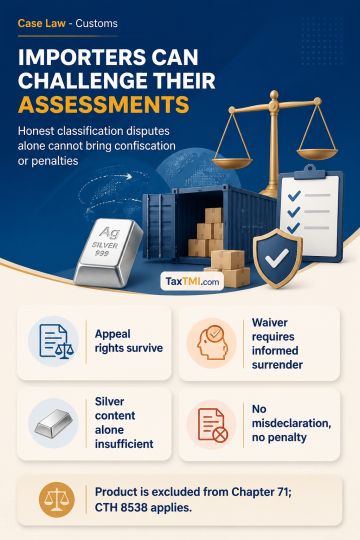
Self-assessed import entries remain appealable, while bona fide classification disputes without misdeclaration cannot justify confiscation or penaltie...
Actual-user customs exemption conditions permit turnkey project transfers when imported windmill components are exclusively used for installation and ...
Customs offence disqualification excludes civil contraventions, preventing refusal of a private bonded warehouse licence based solely on monetary pena...
HC upheld the order of CIT(A) deleting the addition made by the AO on account of alleged unexplained income from sale of shares of Global Capital Markets Ltd. The HC held that the AO's addition was based solely on unsubstantiated third-party information regarding penny stock transactions, without disclosing the source or material to the assessee and without conducting any independent inquiry. The assessee had demonstrably purchased the shares in 2003 and sold them in 2010 through a recognized stock exchange after payment of STT, negating the allegation of short-term accommodation entries. As the transaction was supported by proper documentation and the Revenue failed to prove that the consideration was bogus or that the entities were fictitious, the HC found no perversity in the CIT(A)'s reasoning and dismissed the Revenue's appeal.
HC upheld the order of CIT(A) deleting the addition made by the AO on account of alleged unexplained income from sale of shares of Global Capital Markets Ltd. The HC held that the AO's addition was based solely on unsubstantiated third-party information regarding penny stock transactions, without disclosing the source or material to the assessee and without conducting any independent inquiry. The assessee had demonstrably purchased the shares in 2003 and sold them in 2010 through a recognized stock exchange after payment of STT, negating the allegation of short-term accommodation entries. As the transaction was supported by proper documentation and the Revenue failed to prove that the consideration was bogus or that the entities were fictitious, the HC found no perversity in the CIT(A)'s reasoning and dismissed the Revenue's appeal.
Note: It is a system-generated summary and is for quick reference only.
 TaxTMI
  TaxTMI
 of 4884