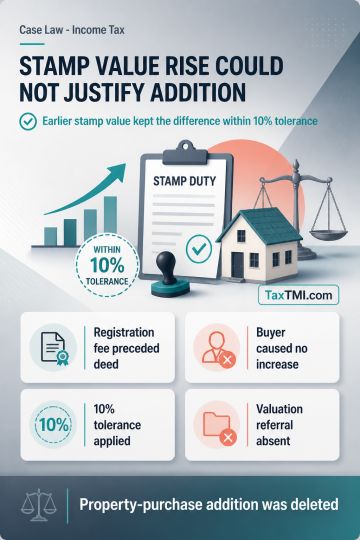
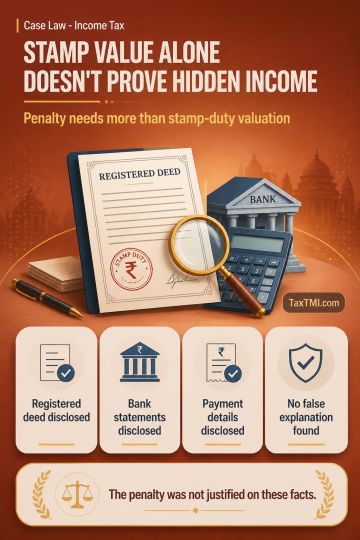
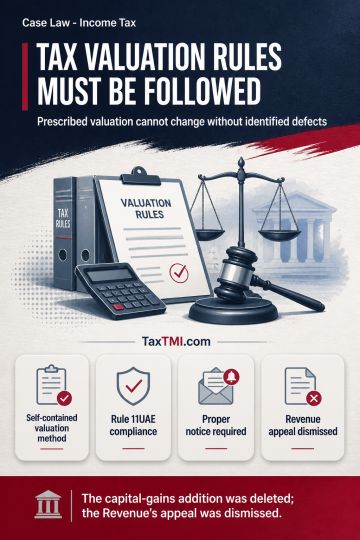
Stamp valuation increases after registration-fee payment led to deletion of property-purchase addition within tolerance and without valuation referral...
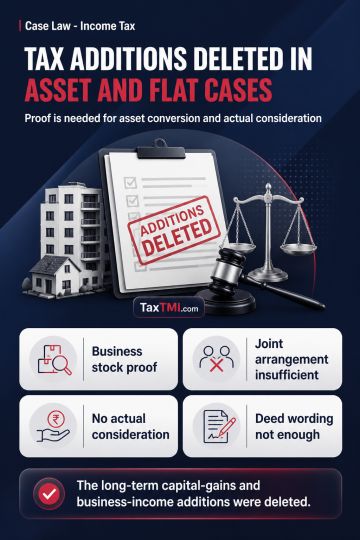
Capital Asset Conversion Requires Proven Business Stock Treatment; Paper Consideration in Spousal Flat Transfers Does Not Create Taxable Business Inco...
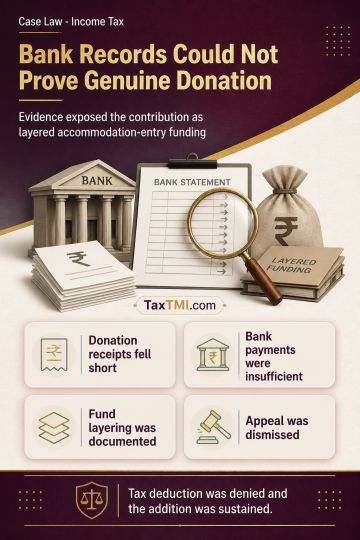
Human-probability test defeats political donation deduction where banking records mask accommodation-entry fund layering and evidence shows non-genuin...
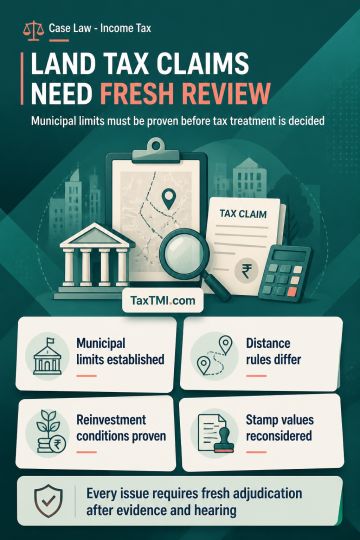
Commercial property status protects capital-gains exemption when residential-house ownership limits are tested, while agricultural-land character gove...
HC upheld the order of CIT(A) deleting the addition made by the AO on account of alleged unexplained income from sale of shares of Global Capital Markets Ltd. The HC held that the AO's addition was based solely on unsubstantiated third-party information regarding penny stock transactions, without disclosing the source or material to the assessee and without conducting any independent inquiry. The assessee had demonstrably purchased the shares in 2003 and sold them in 2010 through a recognized stock exchange after payment of STT, negating the allegation of short-term accommodation entries. As the transaction was supported by proper documentation and the Revenue failed to prove that the consideration was bogus or that the entities were fictitious, the HC found no perversity in the CIT(A)'s reasoning and dismissed the Revenue's appeal.
HC upheld the order of CIT(A) deleting the addition made by the AO on account of alleged unexplained income from sale of shares of Global Capital Markets Ltd. The HC held that the AO's addition was based solely on unsubstantiated third-party information regarding penny stock transactions, without disclosing the source or material to the assessee and without conducting any independent inquiry. The assessee had demonstrably purchased the shares in 2003 and sold them in 2010 through a recognized stock exchange after payment of STT, negating the allegation of short-term accommodation entries. As the transaction was supported by proper documentation and the Revenue failed to prove that the consideration was bogus or that the entities were fictitious, the HC found no perversity in the CIT(A)'s reasoning and dismissed the Revenue's appeal.
Note: It is a system-generated summary and is for quick reference only.
 TaxTMI
  TaxTMI
 of 4883