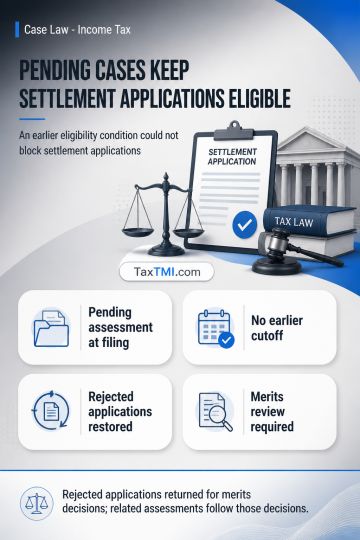
Settlement application eligibility requires a pending assessment when filed, preventing an extra prior-eligibility condition from blocking considerati...
Reassessment for unreturned property sales survives where transfer information, non-filing, and unsupported exemption claims establish a prima facie l...
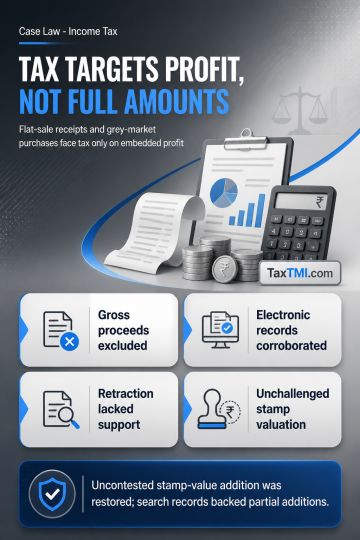
Profit-element taxation limits additions for unaccounted flat-sale receipts and grey-market purchases, while reliable search records support partial a...
The ITAT allowed the appeal of the assessee-trust, holding that the addition of Rs. 44,00,000/- made under s. 143(1) was unsustainable. The CPC had accepted all deductions claimed under ss. 11 and 10(23C), but committed an arithmetical error by incorrectly totaling the deductions at Rs. 7,52,41,564/- instead of Rs. 7,96,41,565/-. This miscalculation led to an erroneous computation of income purportedly chargeable under s. 11(1B), though the figure of Rs. 44,00,000/- was consistently reflected by both the assessee and CPC. ITAT held that the variation stemmed solely from CPC's totaling mistake, not from any disallowance or difference in claim, and therefore directed deletion of the entire addition.
The ITAT allowed the appeal of the assessee-trust, holding that the addition of Rs. 44,00,000/- made under s. 143(1) was unsustainable. The CPC had accepted all deductions claimed under ss. 11 and 10(23C), but committed an arithmetical error by incorrectly totaling the deductions at Rs. 7,52,41,564/- instead of Rs. 7,96,41,565/-. This miscalculation led to an erroneous computation of income purportedly chargeable under s. 11(1B), though the figure of Rs. 44,00,000/- was consistently reflected by both the assessee and CPC. ITAT held that the variation stemmed solely from CPC's totaling mistake, not from any disallowance or difference in claim, and therefore directed deletion of the entire addition.
Note: It is a system-generated summary and is for quick reference only.
 TaxTMI
  TaxTMI
 of 4894