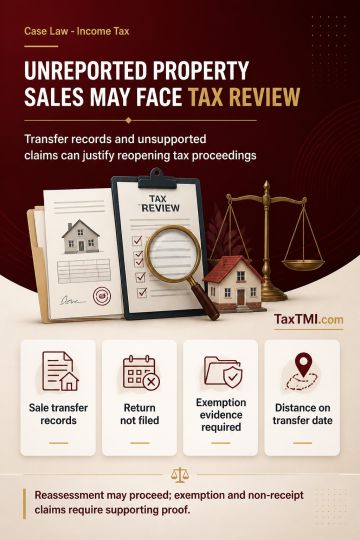
Reassessment for unreturned property sales survives where transfer information, non-filing, and unsupported exemption claims establish a prima facie l...
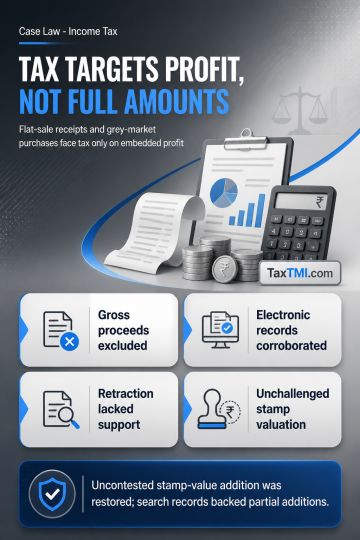
Profit-element taxation limits additions for unaccounted flat-sale receipts and grey-market purchases, while reliable search records support partial a...
ITAT held that the addition u/s 56(2)(viib) in respect of share premium received by the assessee-company is unsustainable. It found no allegation or evidence from the AO of any unaccounted money being introduced, and the genuineness of the share subscription, routed through banking channels and utilised for repayment of loans, stood established. ITAT ruled that the lower authorities could not disregard the assessee's DCF-based valuation and registered valuer's report by mechanically substituting guideline value for land and ignoring brand valuation. It emphasised that the statute requires determination of fair market value, not adoption of guideline rates, and disallowed the AO/CIT(A)'s change of valuation method. Consequently, the valuation adopted by the assessee was upheld and the assessee's appeal allowed in full.
ITAT held that the addition u/s 56(2)(viib) in respect of share premium received by the assessee-company is unsustainable. It found no allegation or evidence from the AO of any unaccounted money being introduced, and the genuineness of the share subscription, routed through banking channels and utilised for repayment of loans, stood established. ITAT ruled that the lower authorities could not disregard the assessee's DCF-based valuation and registered valuer's report by mechanically substituting guideline value for land and ignoring brand valuation. It emphasised that the statute requires determination of fair market value, not adoption of guideline rates, and disallowed the AO/CIT(A)'s change of valuation method. Consequently, the valuation adopted by the assessee was upheld and the assessee's appeal allowed in full.
Note: It is a system-generated summary and is for quick reference only.
 TaxTMI
  TaxTMI
 of 4897