Capital-gains exemption for charitable trusts extends to qualifying fixed deposits, while unrecoverable TDS write-offs may constitute income applicati...
India-UK treaty characterisation of telecom-service receipts as business profits withstands unilateral domestic-law amendments for Indian tax purposes...
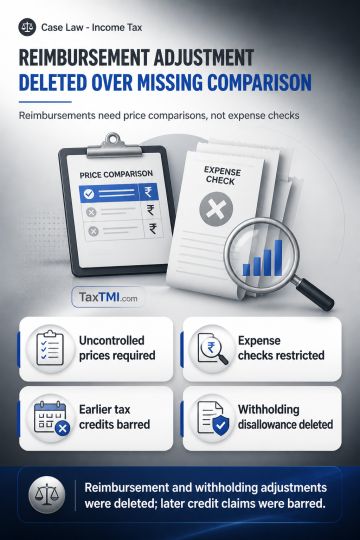
Transfer-pricing reimbursement adjustments require uncontrolled comparables and cannot become expense-genuineness reviews, resulting in deletion of th...
Page of 4881
Press 'Enter' after typing page number.
281 to 300 of 97618 Results
❮
❯
❯❯
0 / 200
Expand Note
Add to Folder
No Folders have been created
+
Are you sure you want to delete "My most important" ?
ITAT held that the addition u/s 56(2)(viib) in respect of share premium received by the assessee-company is unsustainable. It found no allegation or evidence from the AO of any unaccounted money being introduced, and the genuineness of the share subscription, routed through banking channels and utilised for repayment of loans, stood established. ITAT ruled that the lower authorities could not disregard the assessee's DCF-based valuation and registered valuer's report by mechanically substituting guideline value for land and ignoring brand valuation. It emphasised that the statute requires determination of fair market value, not adoption of guideline rates, and disallowed the AO/CIT(A)'s change of valuation method. Consequently, the valuation adopted by the assessee was upheld and the assessee's appeal allowed in full.
ITAT held that the addition u/s 56(2)(viib) in respect of share premium received by the assessee-company is unsustainable. It found no allegation or evidence from the AO of any unaccounted money being introduced, and the genuineness of the share subscription, routed through banking channels and utilised for repayment of loans, stood established. ITAT ruled that the lower authorities could not disregard the assessee's DCF-based valuation and registered valuer's report by mechanically substituting guideline value for land and ignoring brand valuation. It emphasised that the statute requires determination of fair market value, not adoption of guideline rates, and disallowed the AO/CIT(A)'s change of valuation method. Consequently, the valuation adopted by the assessee was upheld and the assessee's appeal allowed in full.
Note: It is a system-generated summary and is for quick reference only.
 TaxTMI
  TaxTMI
 of 4881