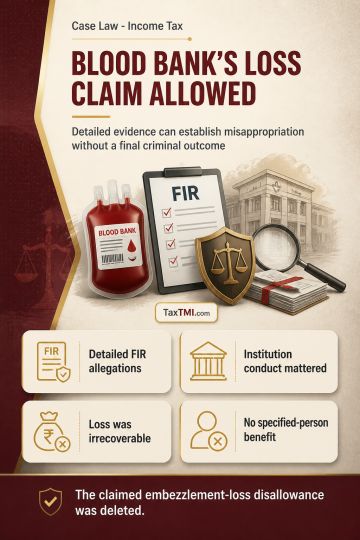
Embezzlement losses in charitable institutions remain allowable when misappropriation is established, irrecoverable, and not a specified-person benefi...
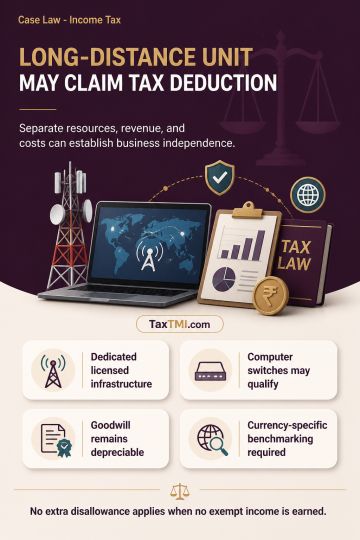
National long-distance undertaking status supports deduction where separately licensed infrastructure, resources, revenue, and expenditure establish c...
Agency reimbursement income follows contractual deposit-liability computation, while pending deposit collections do not constitute deemed-dividend loa...
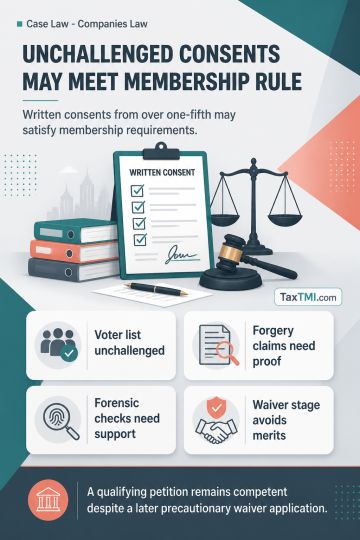
Membership-consent thresholds for oppression petitions are satisfied by unchallenged voter-list consents, while unsupported forgery claims require pro...
NCLAT dismissed the appeal filed by the appellants challenging the NCLT's order directing investigation under s.213 of the Companies Act, 2013 into the affairs of Appellant No.1. Relying on established principles that such investigation cannot be ordered on bare allegations and requires subjective satisfaction based on material indicating public interest prejudice or detriment to members, NCLAT held that the NCLT had correctly applied the law. The Tribunal noted multiple observer reports by a former High Court judge alleging fraudulent transactions, siphoning of funds, and data gaps, and found no prima facie bias. NCLAT held that conclusive proof is not required at this stage, only good reasons and a prima facie case, both of which were adequately recorded in the impugned order.
NCLAT dismissed the appeal filed by the appellants challenging the NCLT's order directing investigation under s.213 of the Companies Act, 2013 into the affairs of Appellant No.1. Relying on established principles that such investigation cannot be ordered on bare allegations and requires subjective satisfaction based on material indicating public interest prejudice or detriment to members, NCLAT held that the NCLT had correctly applied the law. The Tribunal noted multiple observer reports by a former High Court judge alleging fraudulent transactions, siphoning of funds, and data gaps, and found no prima facie bias. NCLAT held that conclusive proof is not required at this stage, only good reasons and a prima facie case, both of which were adequately recorded in the impugned order.
Note: It is a system-generated summary and is for quick reference only.
 TaxTMI
  TaxTMI
 of 4886