Customs exemptions cover photovoltaic assembly machinery and PVF backsheets, while fully declared cleared imports may avoid confiscation and penalties...
Specific tariff classification for LCD devices overrides treatment as electricity-meter parts, defeating differential duty, extended limitation, and p...
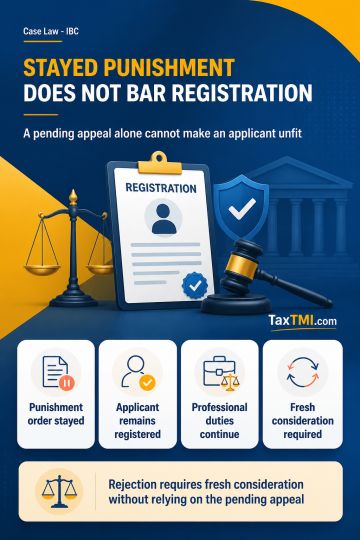
Stayed disciplinary punishment does not establish unfitness for insolvency professional registration; reconsideration must disregard mere pendency of ...
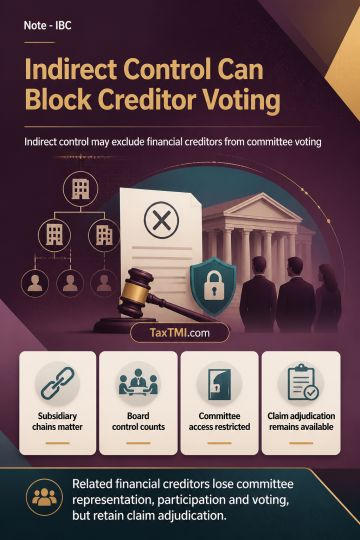
Indirect corporate control can create related-party status, excluding financial creditors from Committee of Creditors representation, participation an...
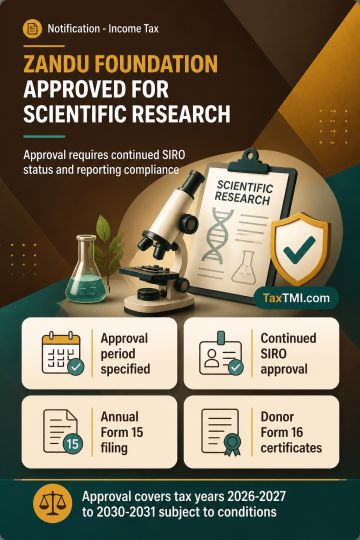
Scientific research association approval requires continuing SIRO status, annual donation reporting, and donor certificates for the approved foundatio...
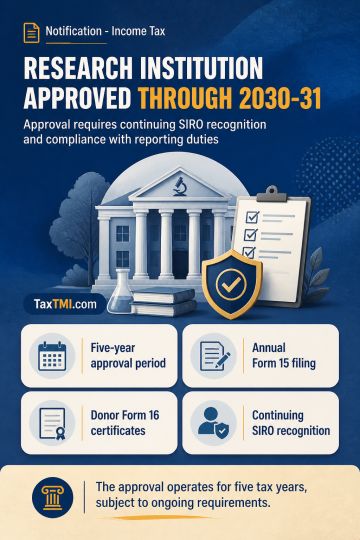
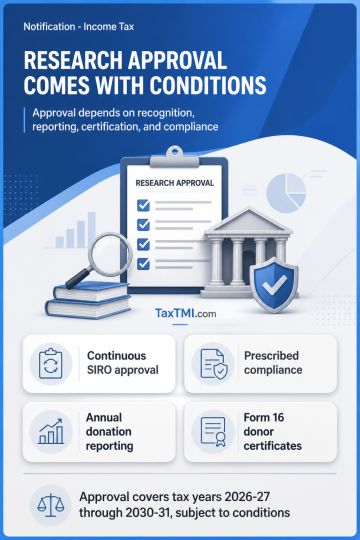
Scientific research institution approval is conditional on SIRO recognition, annual donation reporting, donor certification, and prescribed compliance...
AT set aside SEBI's order holding the appellant guilty of insider trading in the shares of GGL. It held that the alleged "high probability of detection of fraud" on retirement of a PNB officer did not constitute UPSI under the PIT Regulations, as mere probability of future detection is neither concrete nor credible information. AT further held that the appellant's limited business dealings and minority shareholding did not render him a "connected person" or "insider", there being no reasonable expectation of access to UPSI and no evidence of communication of UPSI from Noticee No.1. Trading was found consistent with market behaviour and price movements, not guided by UPSI. Consequently, allegations of violation of Sections 12A(d), 12A(e) of the SEBI Act and Regulation 4(1) of the PIT Regulations failed and the appeal was allowed.
AT set aside SEBI's order holding the appellant guilty of insider trading in the shares of GGL. It held that the alleged "high probability of detection of fraud" on retirement of a PNB officer did not constitute UPSI under the PIT Regulations, as mere probability of future detection is neither concrete nor credible information. AT further held that the appellant's limited business dealings and minority shareholding did not render him a "connected person" or "insider", there being no reasonable expectation of access to UPSI and no evidence of communication of UPSI from Noticee No.1. Trading was found consistent with market behaviour and price movements, not guided by UPSI. Consequently, allegations of violation of Sections 12A(d), 12A(e) of the SEBI Act and Regulation 4(1) of the PIT Regulations failed and the appeal was allowed.
Note: It is a system-generated summary and is for quick reference only.
 TaxTMI
  TaxTMI
 of 4894