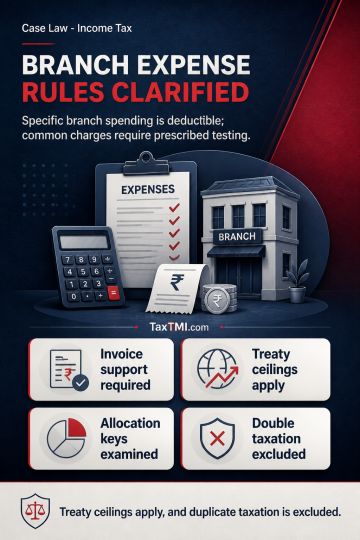
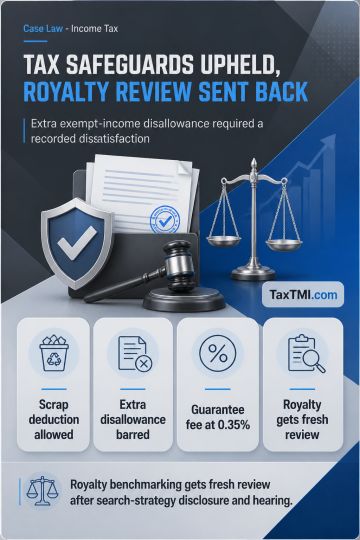
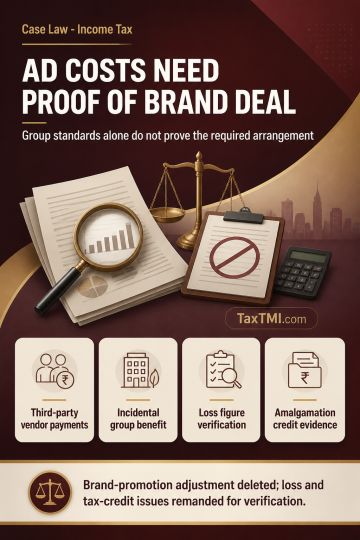
Head Office cost allocation requires prescribed transfer-pricing methods; treaty ceilings bar surcharge and cess, while duplicate taxation is excluded...
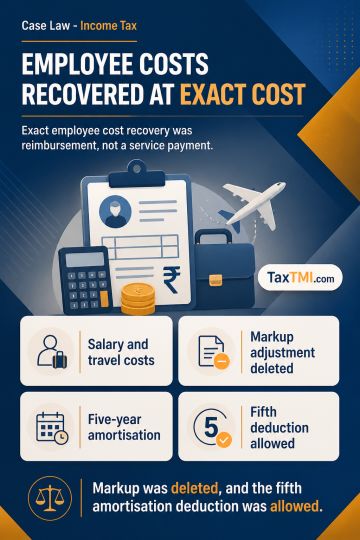
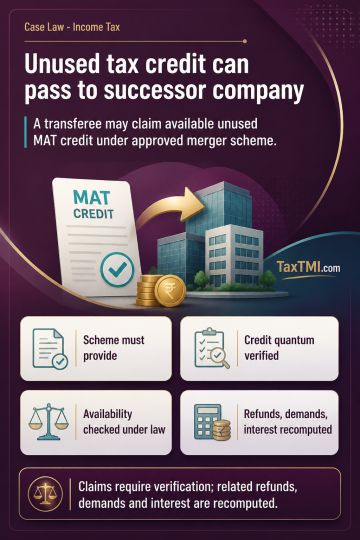
Cost-to-cost reimbursement of seconded employees is not service consideration; transfer-pricing markup was deleted and amalgamation amortisation allow...
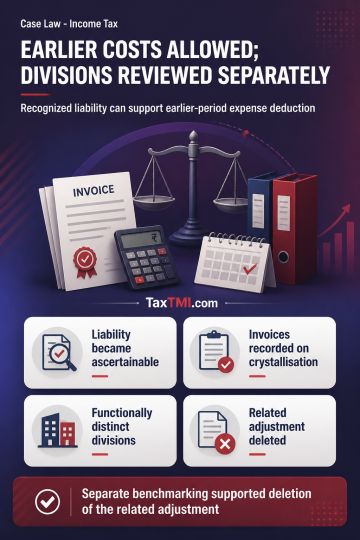
Crystallisation of liability supports prior-period expense deduction, while functionally distinct divisions require separate transfer-pricing benchmar...
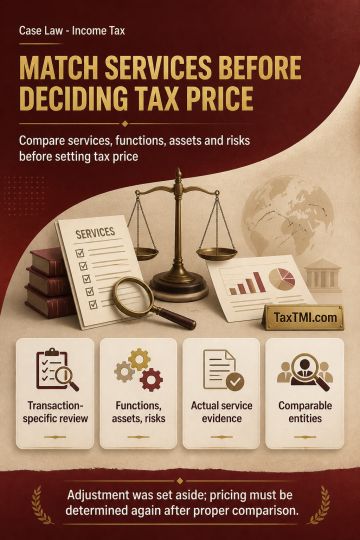
Functional comparability under TNMM requires transaction-specific FAR analysis before benchmarking business-support services provided to associated en...
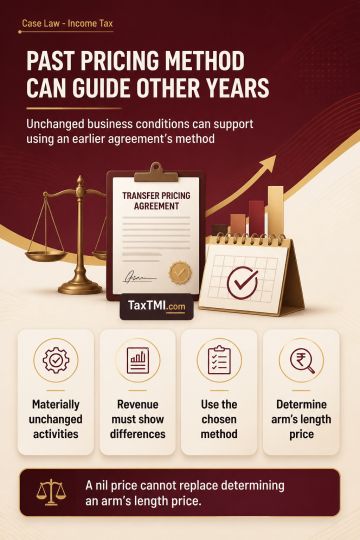
Advance pricing agreement methodology can guide benchmarking for non-covered years when functions, assets, risks and activities remain materially unch...
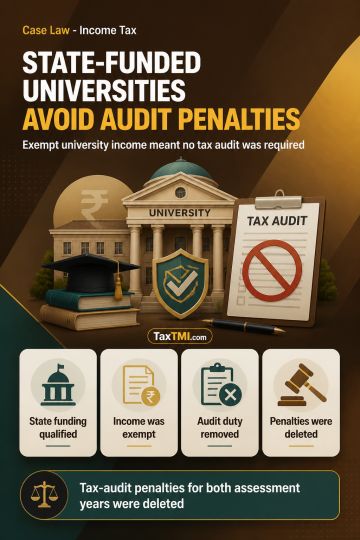
Tax-audit exemption for substantially State-funded educational universities prevents audit-failure penalties where income qualifies for statutory exem...
ITAT held that interest income from deposits and investments with co-operative banks qualifies for deduction under s.80P(2)(d), as co-operative banks are, in substance, co-operative societies. Following consistent judicial precedent, ITAT ruled the assessee is legally entitled to claim such deduction. However, since necessary documentary details were not produced before the lower authorities, ITAT did not grant the deduction outright. Instead, ITAT remanded the matter to the Jurisdictional Assessing Officer to examine the evidentiary details to be furnished by the assessee, after affording adequate opportunity of hearing, and directed that, if the factual claim is found correct, the deduction under s.80P(2)(d) shall be allowed accordingly.
ITAT held that interest income from deposits and investments with co-operative banks qualifies for deduction under s.80P(2)(d), as co-operative banks are, in substance, co-operative societies. Following consistent judicial precedent, ITAT ruled the assessee is legally entitled to claim such deduction. However, since necessary documentary details were not produced before the lower authorities, ITAT did not grant the deduction outright. Instead, ITAT remanded the matter to the Jurisdictional Assessing Officer to examine the evidentiary details to be furnished by the assessee, after affording adequate opportunity of hearing, and directed that, if the factual claim is found correct, the deduction under s.80P(2)(d) shall be allowed accordingly.
Note: It is a system-generated summary and is for quick reference only.
 TaxTMI
 TaxTMI

 of 4927