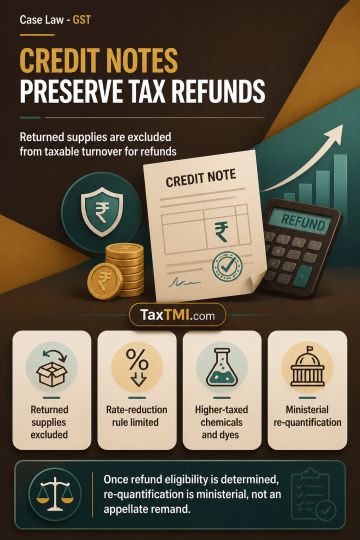
Credit-note turnover adjustments preserve inverted-duty refunds, while ministerial re-computation does not constitute an impermissible appellate reman...
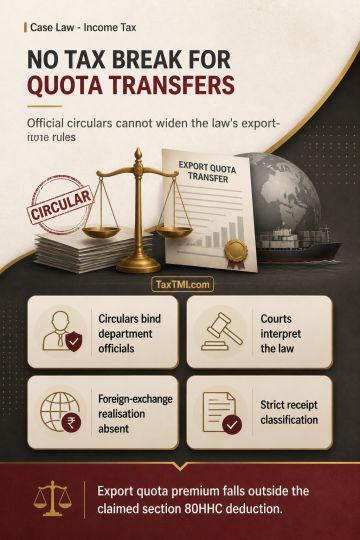
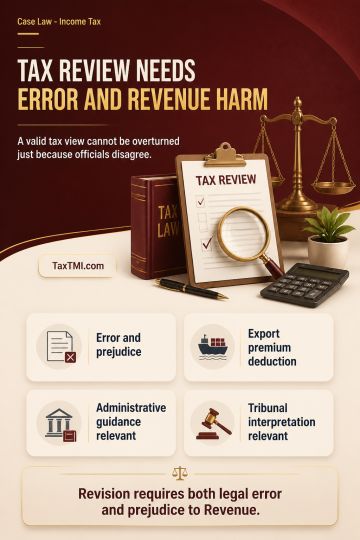
Revisional jurisdiction over export quota premium deductions requires both error and Revenue prejudice; a permissible assessment view cannot be displa...
SC dismissed the appeal, upholding HC's refusal to entertain the writ petition under Art. 226 challenging the CEGAT order. SC held that where the statute provides an equally efficacious alternative remedy before the same HC (here, a reference under s.130A of the Customs Act, 1962), the rule is to refuse writ jurisdiction and treat its exercise as an exception. The appellant's challenge was filed well beyond the limitation period for a reference; any justification for delay should have been urged in an application for condonation under the Limitation Act, 1963, which applies via s.29(2). The belated writ, lacking basic pleadings, amounted to bypassing the statutory mechanism. HC's dismissal, both on maintainability and merits, was affirmed; appeal dismissed.
SC dismissed the appeal, upholding HC's refusal to entertain the writ petition under Art. 226 challenging the CEGAT order. SC held that where the statute provides an equally efficacious alternative remedy before the same HC (here, a reference under s.130A of the Customs Act, 1962), the rule is to refuse writ jurisdiction and treat its exercise as an exception. The appellant's challenge was filed well beyond the limitation period for a reference; any justification for delay should have been urged in an application for condonation under the Limitation Act, 1963, which applies via s.29(2). The belated writ, lacking basic pleadings, amounted to bypassing the statutory mechanism. HC's dismissal, both on maintainability and merits, was affirmed; appeal dismissed.
Note: It is a system-generated summary and is for quick reference only.
 TaxTMI
  TaxTMI
 of 4888