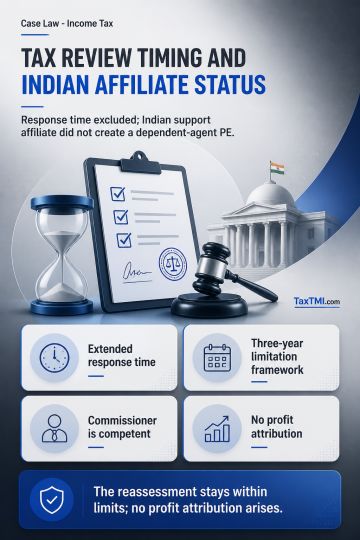
Supervisory permanent establishment requires project-wise duration and qualifying construction nexus; offshore supplies and salary reimbursements rema...
CESTAT held that the order of absolute confiscation of the impugned goods, earlier directed by the Commr. (Appeals), was unsustainable as the goods had already been re-exported. The appellant produced the Let Export Order dated 07.10.2019 showing re-export, which predated both the Review Order of the Commr. of Customs and the subsequent Revenue appeal. The Tribunal noted that the department had been duly informed of the re-export, yet the Commr. proceeded without considering this material fact. Applying the settled legal principle that confiscation cannot be ordered when goods are no longer available and have not been cleared under bond, CESTAT set aside the absolute confiscation and any consequential directions. The appeal of the assessee was accordingly allowed, and the Revenue's action was held to be unwarranted in law.
CESTAT held that the order of absolute confiscation of the impugned goods, earlier directed by the Commr. (Appeals), was unsustainable as the goods had already been re-exported. The appellant produced the Let Export Order dated 07.10.2019 showing re-export, which predated both the Review Order of the Commr. of Customs and the subsequent Revenue appeal. The Tribunal noted that the department had been duly informed of the re-export, yet the Commr. proceeded without considering this material fact. Applying the settled legal principle that confiscation cannot be ordered when goods are no longer available and have not been cleared under bond, CESTAT set aside the absolute confiscation and any consequential directions. The appeal of the assessee was accordingly allowed, and the Revenue's action was held to be unwarranted in law.
Note: It is a system-generated summary and is for quick reference only.
 TaxTMI
  TaxTMI
 of 4881