Customs exemptions cover photovoltaic assembly machinery and PVF backsheets, while fully declared cleared imports may avoid confiscation and penalties...
Specific tariff classification for LCD devices overrides treatment as electricity-meter parts, defeating differential duty, extended limitation, and p...
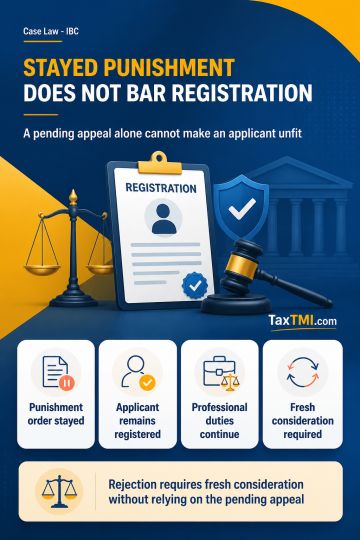
Stayed disciplinary punishment does not establish unfitness for insolvency professional registration; reconsideration must disregard mere pendency of ...
Indirect corporate control can create related-party status, excluding financial creditors from Committee of Creditors representation, participation an...
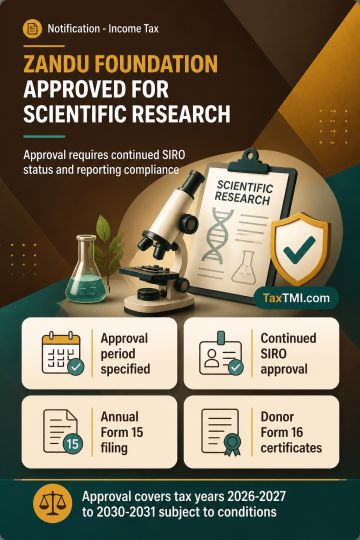
Scientific research association approval requires continuing SIRO status, annual donation reporting, and donor certificates for the approved foundatio...
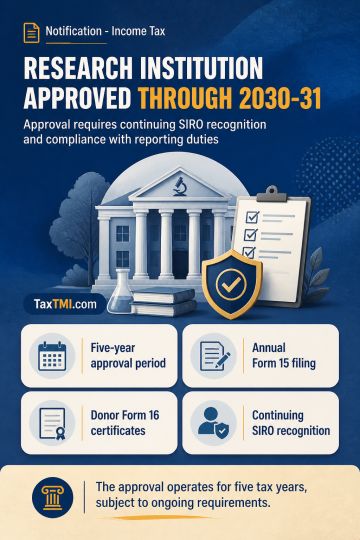
Scientific research institution approval is conditional on SIRO recognition, annual donation reporting, donor certification, and prescribed compliance...
CESTAT held that the order of absolute confiscation of the impugned goods, earlier directed by the Commr. (Appeals), was unsustainable as the goods had already been re-exported. The appellant produced the Let Export Order dated 07.10.2019 showing re-export, which predated both the Review Order of the Commr. of Customs and the subsequent Revenue appeal. The Tribunal noted that the department had been duly informed of the re-export, yet the Commr. proceeded without considering this material fact. Applying the settled legal principle that confiscation cannot be ordered when goods are no longer available and have not been cleared under bond, CESTAT set aside the absolute confiscation and any consequential directions. The appeal of the assessee was accordingly allowed, and the Revenue's action was held to be unwarranted in law.
CESTAT held that the order of absolute confiscation of the impugned goods, earlier directed by the Commr. (Appeals), was unsustainable as the goods had already been re-exported. The appellant produced the Let Export Order dated 07.10.2019 showing re-export, which predated both the Review Order of the Commr. of Customs and the subsequent Revenue appeal. The Tribunal noted that the department had been duly informed of the re-export, yet the Commr. proceeded without considering this material fact. Applying the settled legal principle that confiscation cannot be ordered when goods are no longer available and have not been cleared under bond, CESTAT set aside the absolute confiscation and any consequential directions. The appeal of the assessee was accordingly allowed, and the Revenue's action was held to be unwarranted in law.
Note: It is a system-generated summary and is for quick reference only.
 TaxTMI
  TaxTMI
 of 4879