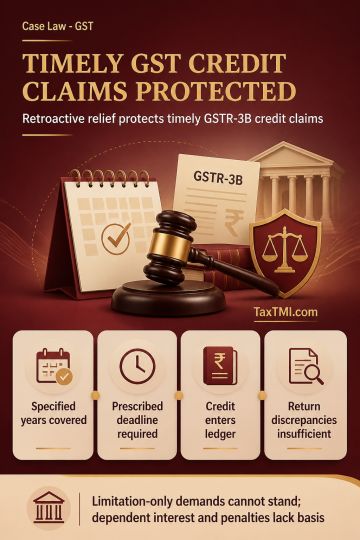
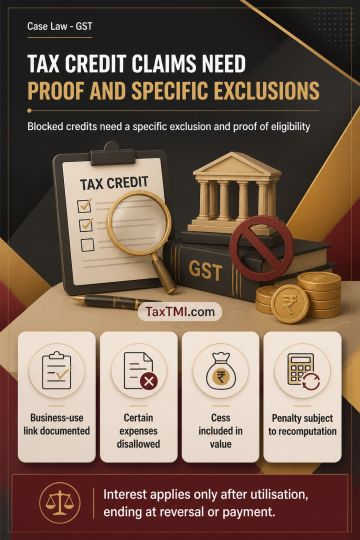
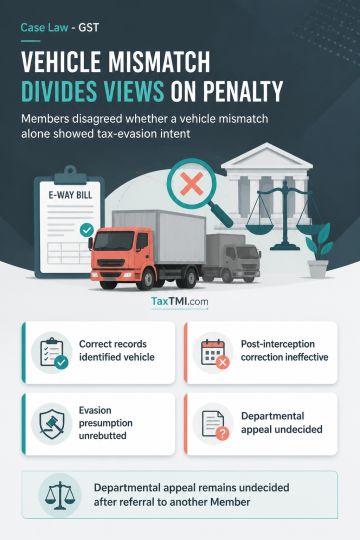
Customs-controlled cargo movement now includes GDL, subject to EXIM prioritisation, segregation, verification, reconciliation and enforcement safeguar...
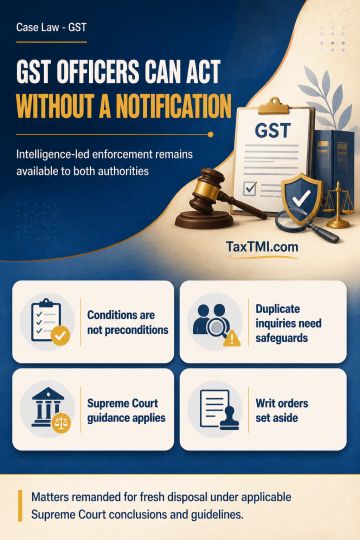
GST cross-empowerment remains effective without conditional notification, while duplicate proceedings require established safeguards against overlappi...
SC held that statutory "first charge" created under S.11(2) EPF&MP Act over the assets of an establishment for provident fund dues prevails over the priority granted to secured creditors under Ss.26E, 35 and 13 of the SARFAESI Act. While SARFAESI is later in time and contains a non-obstante clause, the Court ruled that mere priority cannot override a legislatively created first charge. The secured creditor (appellant-bank) is permitted to proceed with auction of the secured assets; however, from the sale proceeds, provident fund dues must be discharged first, followed by the bank's secured debt. Workmen are granted liberty to approach the competent authority under the MRTU & PULP Act for determination of their dues, to be considered without reference to earlier delay. The impugned judgment is set aside and the appeal is allowed.
SC held that statutory "first charge" created under S.11(2) EPF&MP Act over the assets of an establishment for provident fund dues prevails over the priority granted to secured creditors under Ss.26E, 35 and 13 of the SARFAESI Act. While SARFAESI is later in time and contains a non-obstante clause, the Court ruled that mere priority cannot override a legislatively created first charge. The secured creditor (appellant-bank) is permitted to proceed with auction of the secured assets; however, from the sale proceeds, provident fund dues must be discharged first, followed by the bank's secured debt. Workmen are granted liberty to approach the competent authority under the MRTU & PULP Act for determination of their dues, to be considered without reference to earlier delay. The impugned judgment is set aside and the appeal is allowed.
Note: It is a system-generated summary and is for quick reference only.
 TaxTMI
  TaxTMI
 of 4879