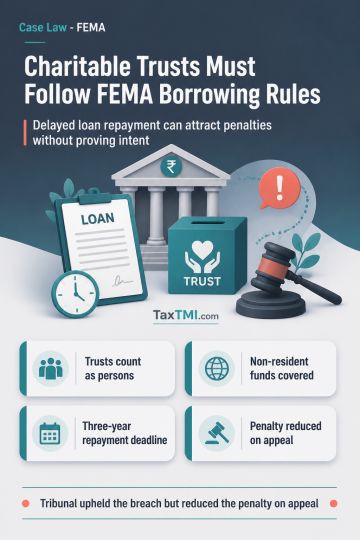
FEMA borrowing restrictions bind charitable trusts, and civil penalties apply without proving intent for delayed repayment of non-resident rupee loans...
SC upheld the dismissal of the appellants' S.37 appeal, affirming the S.34 order and the arbitral award granting interest, including post-award interest, at 24% p.a. SC reiterated that under S.31(7)(a) the arbitral tribunal may award pre-award interest subject to contractual terms, while under S.31(7)(b) post-award interest is mandatory, with only the rate being discretionary; absent a specified rate, the statutory rate applies. The contractual rate of 24% p.a. was held not to offend public policy under S.34(2)(b), as exorbitance of interest alone does not constitute violation of the fundamental policy of Indian law unless it is shockingly perverse. The challenge based on the Usurious Loans Act, 1918 and related legislation was rejected. The appeal was dismissed.
SC upheld the dismissal of the appellants' S.37 appeal, affirming the S.34 order and the arbitral award granting interest, including post-award interest, at 24% p.a. SC reiterated that under S.31(7)(a) the arbitral tribunal may award pre-award interest subject to contractual terms, while under S.31(7)(b) post-award interest is mandatory, with only the rate being discretionary; absent a specified rate, the statutory rate applies. The contractual rate of 24% p.a. was held not to offend public policy under S.34(2)(b), as exorbitance of interest alone does not constitute violation of the fundamental policy of Indian law unless it is shockingly perverse. The challenge based on the Usurious Loans Act, 1918 and related legislation was rejected. The appeal was dismissed.
Note: It is a system-generated summary and is for quick reference only.
 TaxTMI
  TaxTMI
 of 4888