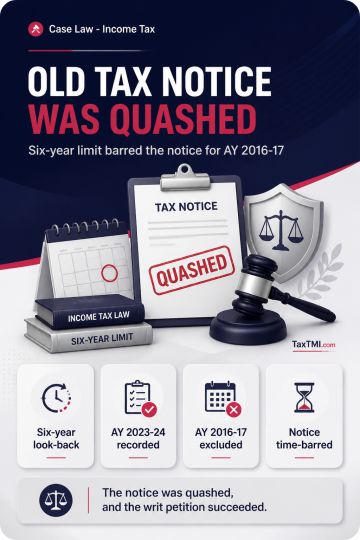
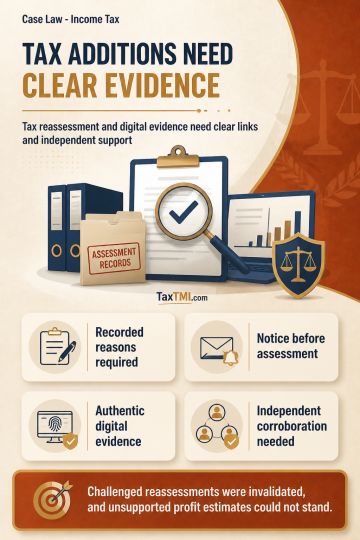
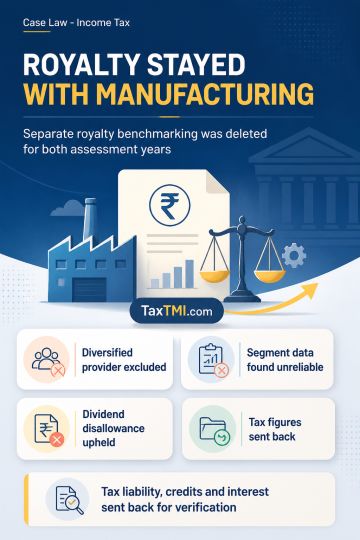
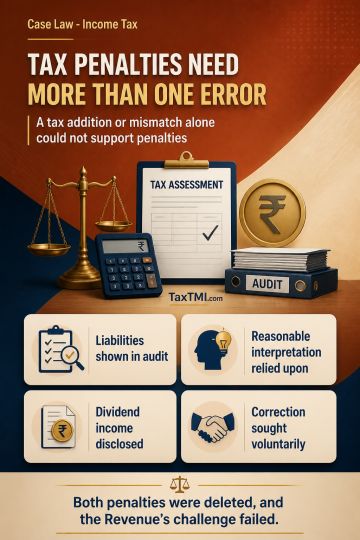
Judicial discipline requires consistent reassessment treatment where identical facts were decided for the same taxpayer in the preceding assessment ye...
Agreement-date stamp valuation requires the same registered property, fixed consideration, and qualifying payment; an unrelated prior booking cannot a...
HC held that initiation of proceedings under s.130 of the GST Act based solely on alleged excess stock observed during a survey, without physical counting, was unsustainable. The court reiterated that registered persons must maintain accounts under s.35 and that s.35(6) permits determination of tax on unaccounted goods with applicability of ss.73/74 mutatis mutandis, but proceedings under s.130 are not the appropriate mechanism where excess stock is merely noted on survey. In consequence, the impugned orders were quashed and the petition allowed, with directions accordingly, and no order for proceedings under s.130 to be sustained in the present facts.
HC held that initiation of proceedings under s.130 of the GST Act based solely on alleged excess stock observed during a survey, without physical counting, was unsustainable. The court reiterated that registered persons must maintain accounts under s.35 and that s.35(6) permits determination of tax on unaccounted goods with applicability of ss.73/74 mutatis mutandis, but proceedings under s.130 are not the appropriate mechanism where excess stock is merely noted on survey. In consequence, the impugned orders were quashed and the petition allowed, with directions accordingly, and no order for proceedings under s.130 to be sustained in the present facts.
Note: It is a system-generated summary and is for quick reference only.
 TaxTMI
  TaxTMI
 of 4886