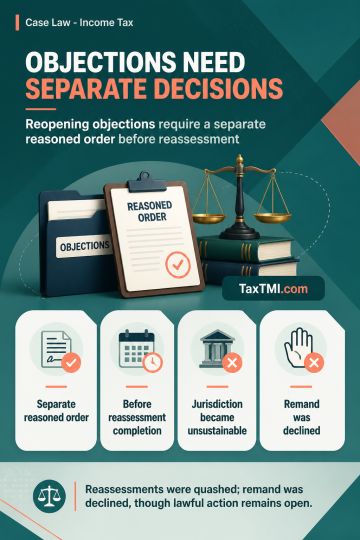
Separate speaking orders on reopening objections are mandatory; deciding them within reassessment invalidates jurisdiction and precludes revival of st...
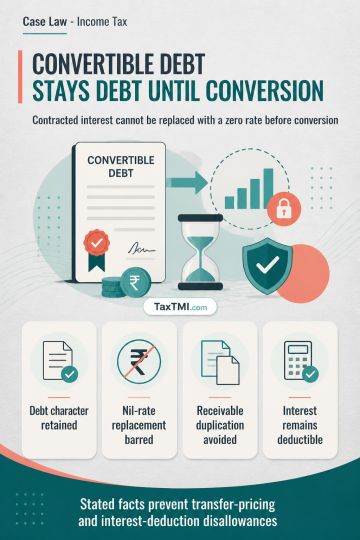
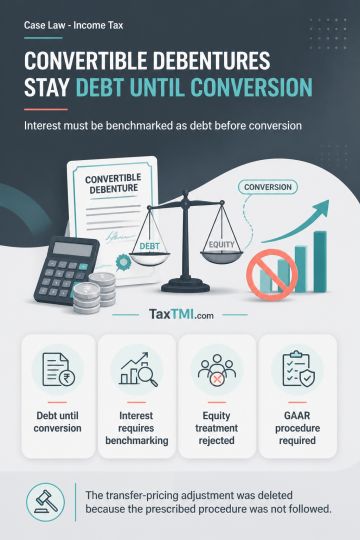
Compulsorily convertible debentures remain debt before conversion, preventing transfer-pricing and interest-deduction disallowances on the stated fact...
Stock-in-trade transfer taxability follows possession and consideration, not later conveyance registration, limiting deemed-value provisions to the ac...
CESTAT allowed the appeal and set aside the penalty imposed under Rule 26 of the Central Excise Rules, 2004 on the appellant (employee of a merchant exporter). The Tribunal held the adjudicatory order failed to articulate how the appellant met the criteria of Rule 26(2), there was no evidence of pecuniary benefit beyond salary or of involvement in issuance/abetment of documents, and testimonial evidence lacked required corroboration. In light of binding precedent and the absence of confiscation of goods, the Tribunal concluded Rule 26 was inapplicable and quashed the personal penalty.
CESTAT allowed the appeal and set aside the penalty imposed under Rule 26 of the Central Excise Rules, 2004 on the appellant (employee of a merchant exporter). The Tribunal held the adjudicatory order failed to articulate how the appellant met the criteria of Rule 26(2), there was no evidence of pecuniary benefit beyond salary or of involvement in issuance/abetment of documents, and testimonial evidence lacked required corroboration. In light of binding precedent and the absence of confiscation of goods, the Tribunal concluded Rule 26 was inapplicable and quashed the personal penalty.
Note: It is a system-generated summary and is for quick reference only.
 TaxTMI
  TaxTMI