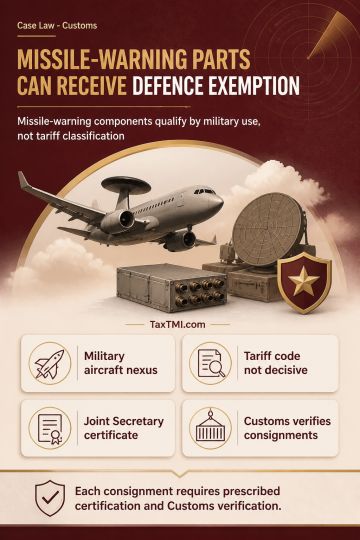
Customs-controlled cargo movement now includes GDL, subject to EXIM prioritisation, segregation, verification, reconciliation and enforcement safeguar...
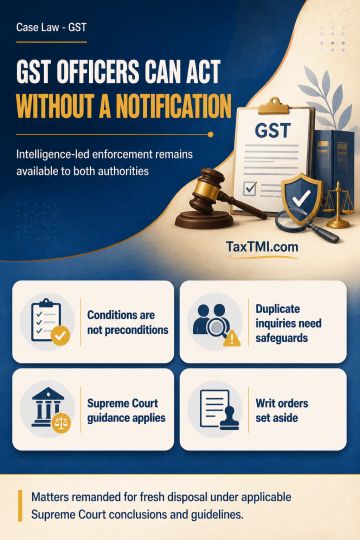
GST cross-empowerment remains effective without conditional notification, while duplicate proceedings require established safeguards against overlappi...
CESTAT allowed the appeal, holding that the ISD's distribution of CENVAT/ITC to the recipient unit was lawful; mere technical defects in supplier invoices (addressed to another unit or absence of non-essential particulars) and reliance on internal CWIP ledgers do not suffice to disallow credit where genuineness is not disproved and corroborative evidence (payments, vouchers, performance proof) exists. The Tribunal found no findings of fabricated invoices, shell suppliers or circular payments and concluded the Department failed to establish the two statutory conditions under Rule 7/ISD provisions. Further, invocation of the extended limitation period was not established, rendering the demand time-barred. Consequently the demand, interest and penalties were vacated.
CESTAT allowed the appeal, holding that the ISD's distribution of CENVAT/ITC to the recipient unit was lawful; mere technical defects in supplier invoices (addressed to another unit or absence of non-essential particulars) and reliance on internal CWIP ledgers do not suffice to disallow credit where genuineness is not disproved and corroborative evidence (payments, vouchers, performance proof) exists. The Tribunal found no findings of fabricated invoices, shell suppliers or circular payments and concluded the Department failed to establish the two statutory conditions under Rule 7/ISD provisions. Further, invocation of the extended limitation period was not established, rendering the demand time-barred. Consequently the demand, interest and penalties were vacated.
Note: It is a system-generated summary and is for quick reference only.
 TaxTMI
  TaxTMI
 of 4894