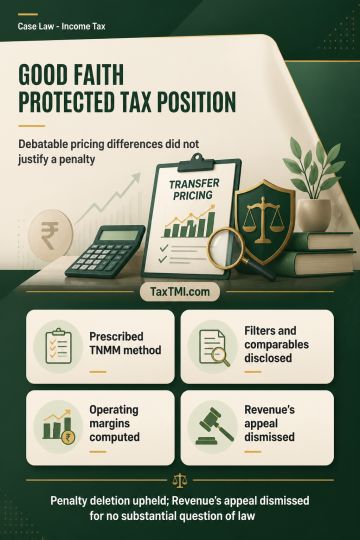
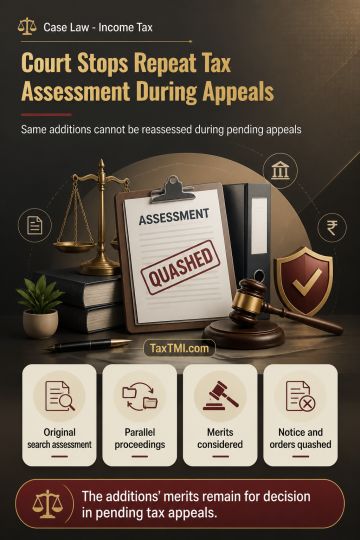
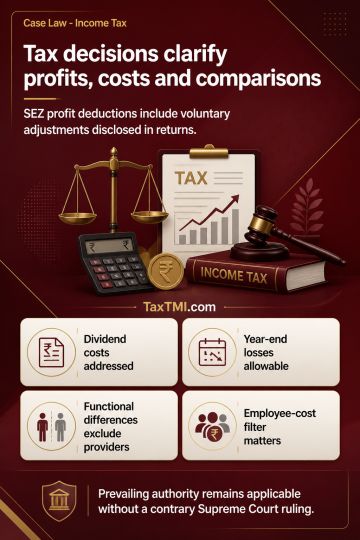
SEZ-unit profit deduction covers voluntary transfer-pricing adjustments, while exempt-income costs, foreign-exchange loss and ITeS comparables are exa...
Page of 4884
Press 'Enter' after typing page number.
221 to 240 of 97661 Results
❮
❯
❯❯
0 / 200
Expand Note
Add to Folder
No Folders have been created
+
Are you sure you want to delete "My most important" ?
ITAT held that the reassessment proceedings initiated under s.147 and notice issued under s.148 are invalid because the Pr. CIT's approval under s.151(2) was a mechanical, non-application of mind endorsement. Relying on controlling High Court precedent that condemns perfunctory sanctions evidenced by mere recorded satisfaction, the Tribunal found the sanction to reopen was vitiated. Consequentially, the s.148 notice was held bad in law and the consequent reassessment order was quashed. The appeal by the assessee was allowed and the reassessment proceedings set aside.
ITAT held that the reassessment proceedings initiated under s.147 and notice issued under s.148 are invalid because the Pr. CIT's approval under s.151(2) was a mechanical, non-application of mind endorsement. Relying on controlling High Court precedent that condemns perfunctory sanctions evidenced by mere recorded satisfaction, the Tribunal found the sanction to reopen was vitiated. Consequentially, the s.148 notice was held bad in law and the consequent reassessment order was quashed. The appeal by the assessee was allowed and the reassessment proceedings set aside.
Note: It is a system-generated summary and is for quick reference only.
 TaxTMI
  TaxTMI
 of 4884