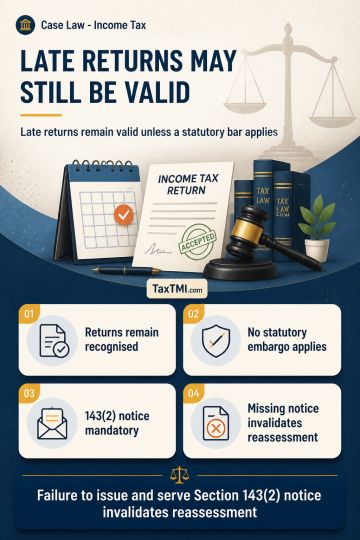
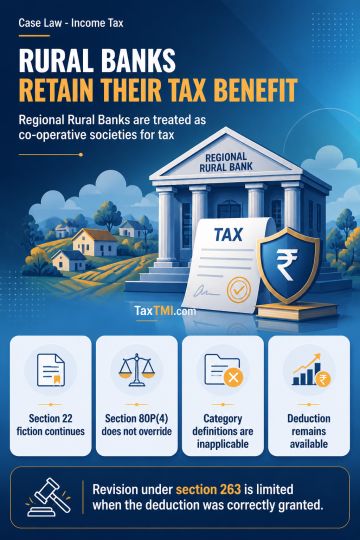
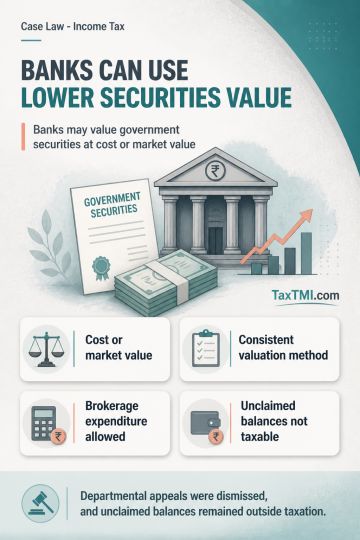
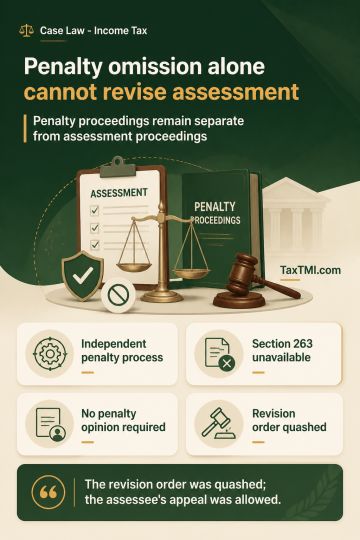
Duplicate PAN allocation requires record verification and deactivation reasons before assessment-related transactions can be attributed to an assessee...
Faceless assessment safeguards require requested personal hearings and adequate final show-cause response time, failing which reassessment is required...
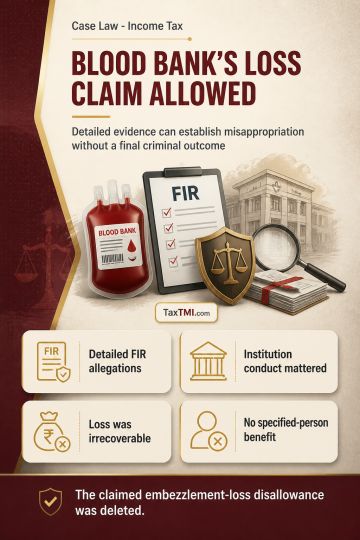
Embezzlement losses in charitable institutions remain allowable when misappropriation is established, irrecoverable, and not a specified-person benefi...
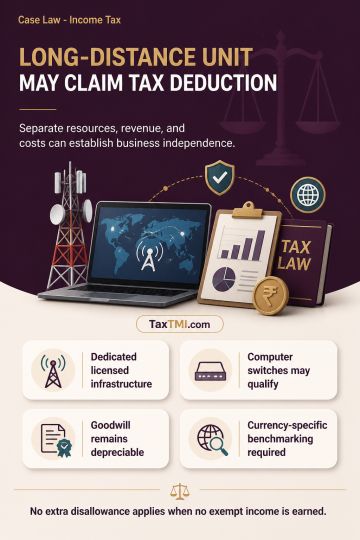
National long-distance undertaking status supports deduction where separately licensed infrastructure, resources, revenue, and expenditure establish c...
Agency reimbursement income follows contractual deposit-liability computation, while pending deposit collections do not constitute deemed-dividend loa...
Page of 4888
Press 'Enter' after typing page number.
201 to 220 of 97755 Results
❮
❯
❯❯
0 / 200
Expand Note
Add to Folder
No Folders have been created
+
Are you sure you want to delete "My most important" ?
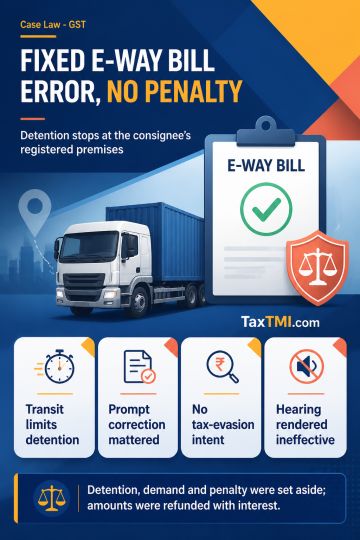
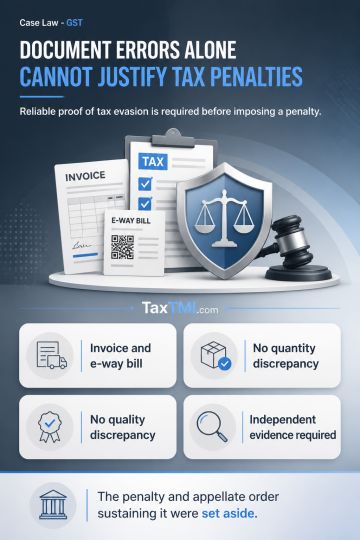
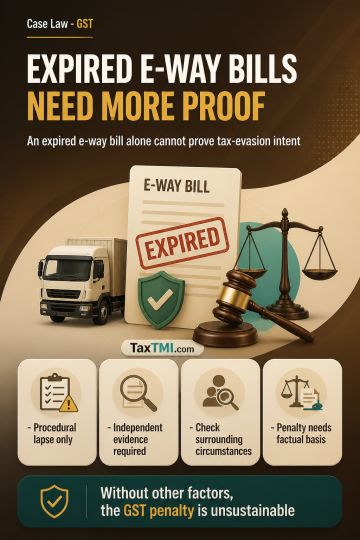
The HC allowed the petition and set aside the impugned orders of 09.08.2024 and 30.08.2024 imposing penalty under s.129(3) of the U.P. Goods and Services Act, 2017. Although the e-way bill had expired and was not renewed, the vehicle carried the goods and invoices at inspection, and the assessing authority failed to demonstrate any material indicating an intention by the petitioner to evade tax. In the absence of requisite satisfaction as to tax-evasion intent, the technical non-compliance alone could not sustain penalty under s.129(3); accordingly the penalty orders were quashed and the petition was allowed.
The HC allowed the petition and set aside the impugned orders of 09.08.2024 and 30.08.2024 imposing penalty under s.129(3) of the U.P. Goods and Services Act, 2017. Although the e-way bill had expired and was not renewed, the vehicle carried the goods and invoices at inspection, and the assessing authority failed to demonstrate any material indicating an intention by the petitioner to evade tax. In the absence of requisite satisfaction as to tax-evasion intent, the technical non-compliance alone could not sustain penalty under s.129(3); accordingly the penalty orders were quashed and the petition was allowed.
Note: It is a system-generated summary and is for quick reference only.
 TaxTMI
  TaxTMI
 of 4888