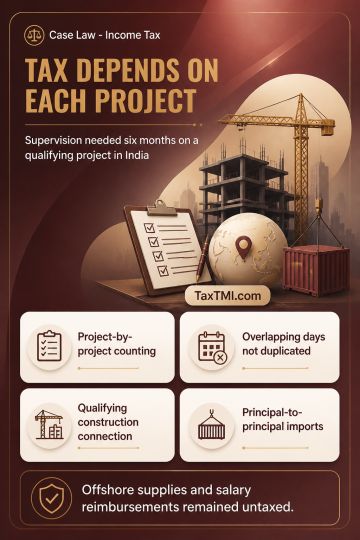
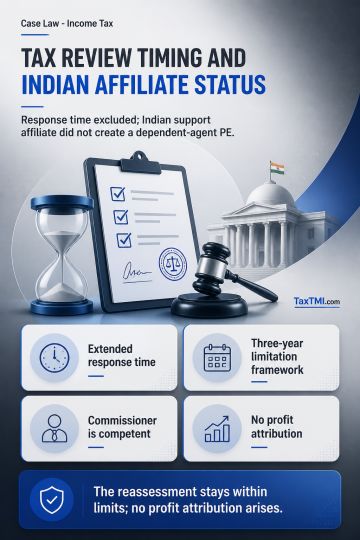
Supervisory permanent establishment requires project-wise duration and qualifying construction nexus; offshore supplies and salary reimbursements rema...
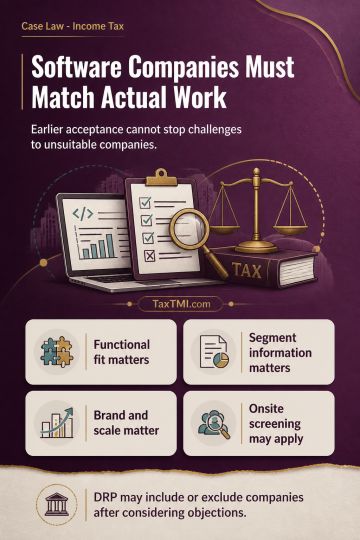
Transfer-pricing comparability permits fresh objections and filters where software service comparables are functionally unsuitable for arm's-length pr...
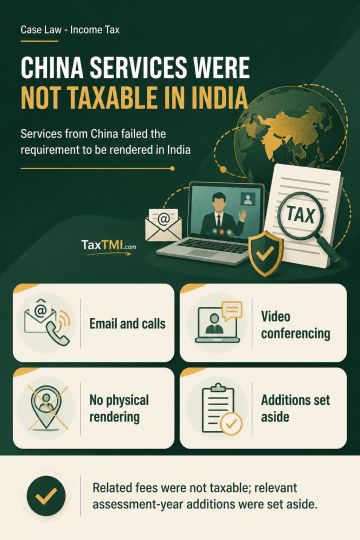
Territorial rendering requirement excludes China-based management and consultancy services from fees for technical services under the India-China DTAA...
AAR held that fusible interlining fabric composed of 85% or more cotton is classifiable under Chapter 52 of the Tariff Schedule. Relying on the legal effect of the Tribunal's prior order and Circular No. 5/89 concerning the treatment of fusible interlinings before the insertion and after deletion of Note 2(c) to Chapter 59, the Authority concluded that such goods are to be classified according to their predominant textile material; where cotton predominates, Chapter 52 applies. The applicant's submitted laboratory test establishing textile composition governed the classification outcome, resulting in duty treatment and tariff classification under Chapter 52.
AAR held that fusible interlining fabric composed of 85% or more cotton is classifiable under Chapter 52 of the Tariff Schedule. Relying on the legal effect of the Tribunal's prior order and Circular No. 5/89 concerning the treatment of fusible interlinings before the insertion and after deletion of Note 2(c) to Chapter 59, the Authority concluded that such goods are to be classified according to their predominant textile material; where cotton predominates, Chapter 52 applies. The applicant's submitted laboratory test establishing textile composition governed the classification outcome, resulting in duty treatment and tariff classification under Chapter 52.
Note: It is a system-generated summary and is for quick reference only.
 TaxTMI
  TaxTMI
 of 4879