Form 26AS evidence requires successor-entity accounting verification after business transfer, while invoice-supported related-party advertising expend...
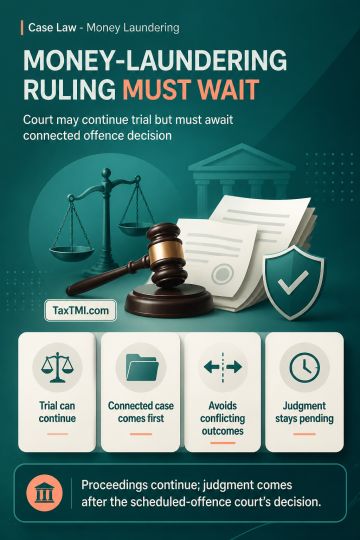
Money-laundering judgment timing requires awaiting the scheduled-offence decision despite continuation of the underlying trial where outcomes directly...
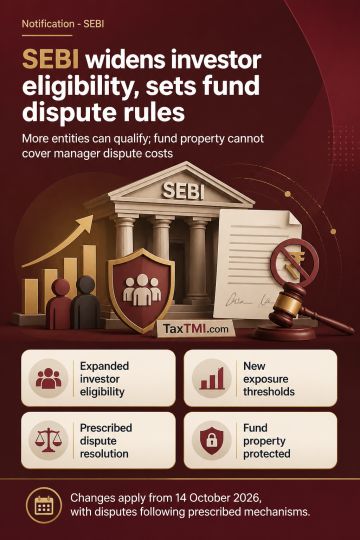
Accredited investor eligibility expands through securities-market exposure, while alternative investment fund disputes require prescribed resolution a...
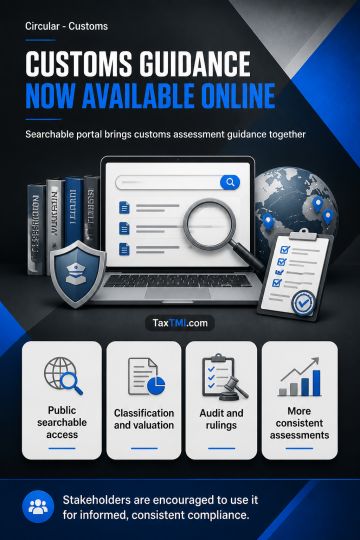
Customs Assessment Portal centralises classification and valuation guidance to support consistent, transparent and informed compliance across stakehol...
Page of 4918
Press 'Enter' after typing page number.
101 to 120 of 98359 Results
❮
❯
❯❯
0 / 200
Expand Note
Add to Folder
No Folders have been created
+
Are you sure you want to delete "My most important" ?
ITAT allowed the appeal of the foreign taxpayer (a UK tax resident) and held that amounts received for provision of proprietary e-invoicing software and incidental training do not constitute "fees for technical services" under Article 13(4) of the India-UK DTAA. Relying on the HC's analysis, the tribunal found the requisite "make available" condition absent because the training merely enabled use of the taxpayer's e-platform and did not transfer technical know-how, processes, or rights that would allow the recipient to independently render the invoicing service. Consequently, such receipts do not accrue or arise in India as FTS and are not chargeable to tax under the Act.
ITAT allowed the appeal of the foreign taxpayer (a UK tax resident) and held that amounts received for provision of proprietary e-invoicing software and incidental training do not constitute "fees for technical services" under Article 13(4) of the India-UK DTAA. Relying on the HC's analysis, the tribunal found the requisite "make available" condition absent because the training merely enabled use of the taxpayer's e-platform and did not transfer technical know-how, processes, or rights that would allow the recipient to independently render the invoicing service. Consequently, such receipts do not accrue or arise in India as FTS and are not chargeable to tax under the Act.
Note: It is a system-generated summary and is for quick reference only.
 TaxTMI
  TaxTMI
 of 4918