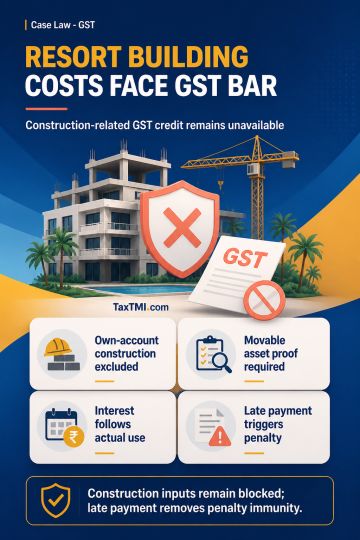
Blocked input tax credit for resort construction remains unavailable; interest follows actual utilisation, while delayed payment attracts statutory pe...
Duplicate PAN allocation requires record verification and deactivation reasons before assessment-related transactions can be attributed to an assessee...
Faceless assessment safeguards require requested personal hearings and adequate final show-cause response time, failing which reassessment is required...
The HC dismissed the writ petition as not maintainable in view of alleged fraudulent availment of Input Tax Credit and clandestine clearance of goods, holding that writ jurisdiction is ordinarily inappropriate where complex factual investigations, voluminous evidence and potential prejudice to the exchequer and the GST regime are involved. The Court relegated the Petitioner to statutory appellate remedies, observed that large-scale ITC claims or GST evasion should be ventilated on appeal, and permitted the Petitioner to file an appeal against the impugned order by 30 November 2025 with the requisite pre-deposit in accordance with law. Petition disposed.
The HC dismissed the writ petition as not maintainable in view of alleged fraudulent availment of Input Tax Credit and clandestine clearance of goods, holding that writ jurisdiction is ordinarily inappropriate where complex factual investigations, voluminous evidence and potential prejudice to the exchequer and the GST regime are involved. The Court relegated the Petitioner to statutory appellate remedies, observed that large-scale ITC claims or GST evasion should be ventilated on appeal, and permitted the Petitioner to file an appeal against the impugned order by 30 November 2025 with the requisite pre-deposit in accordance with law. Petition disposed.
Note: It is a system-generated summary and is for quick reference only.
 TaxTMI
  TaxTMI