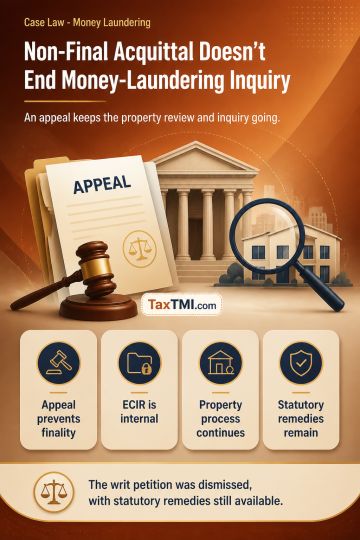
Fraud classification show-cause notices founded on inconclusive forensic audit material cannot sustain action, permitting fresh proceedings on conclus...
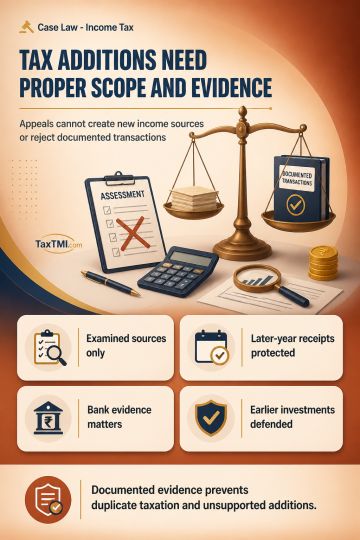
Appellate enhancement limits protect against new income sources, while documented credits and prior-year investments resist unexplained-income additio...
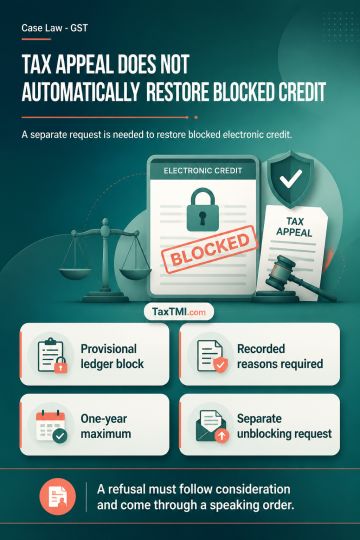
HC dismissed the writ petition and held it premature and not maintainable, directing the petitioner to pursue the statutory remedy under Section 107 rather than relief under Article 226. The court recorded that where a proper officer (not below Joint Commissioner) has reasons to believe under Section 67 of suppression or evasion, he may inspect, search and, under Section 69, arrest, and seize documents; thereafter a notice under Section 73 (three-year limitation) or Section 74 (five-year limitation) may be issued. The court refused to examine the correctness of issuance of a Section 74 notice at writ stage, leaving the limitation and merits to the adjudicatory authority; observations of the HC are not to influence the proper officer.
HC dismissed the writ petition and held it premature and not maintainable, directing the petitioner to pursue the statutory remedy under Section 107 rather than relief under Article 226. The court recorded that where a proper officer (not below Joint Commissioner) has reasons to believe under Section 67 of suppression or evasion, he may inspect, search and, under Section 69, arrest, and seize documents; thereafter a notice under Section 73 (three-year limitation) or Section 74 (five-year limitation) may be issued. The court refused to examine the correctness of issuance of a Section 74 notice at writ stage, leaving the limitation and merits to the adjudicatory authority; observations of the HC are not to influence the proper officer.
Note: It is a system-generated summary and is for quick reference only.
 TaxTMI
  TaxTMI
 of 4891