Mandatory textile export qualifiers distinguish flame-retardant fabrics from other listed fabrics for automated identification under the textiles ince...
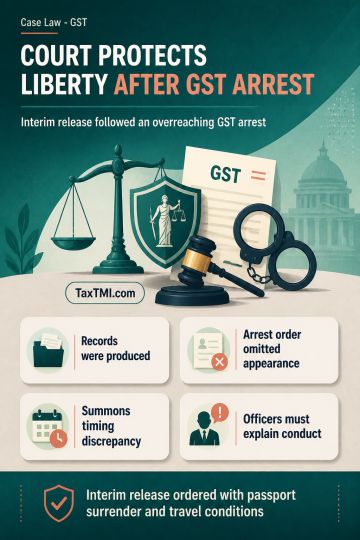
Personal liberty safeguards restrict arrest after court-directed GST appearance, requiring interim release where authorities overreach pending proceed...
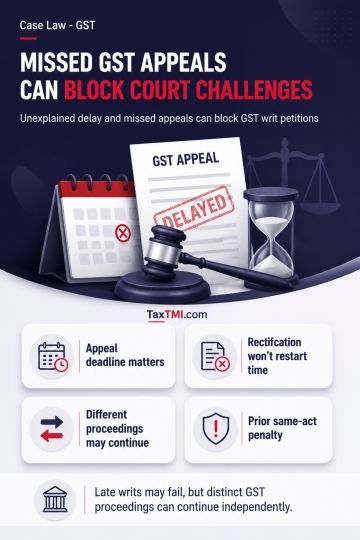
Alternative statutory remedy and delay bar GST writ challenges despite pending rectification, while distinct subject matter permits parallel proceedin...
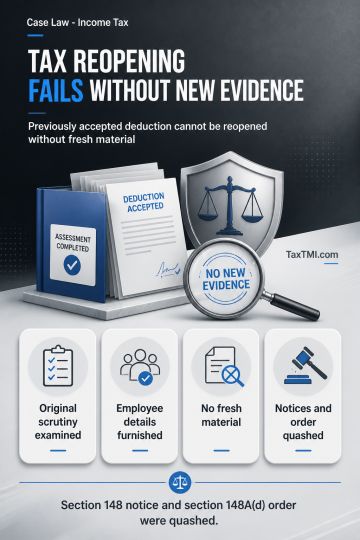
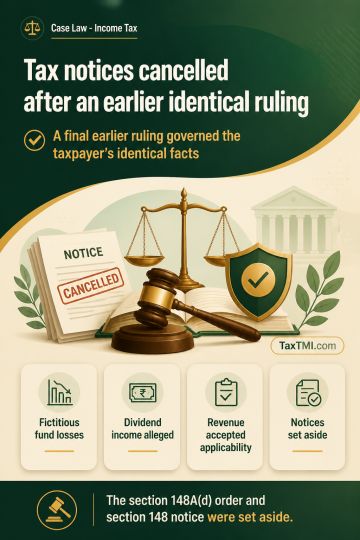
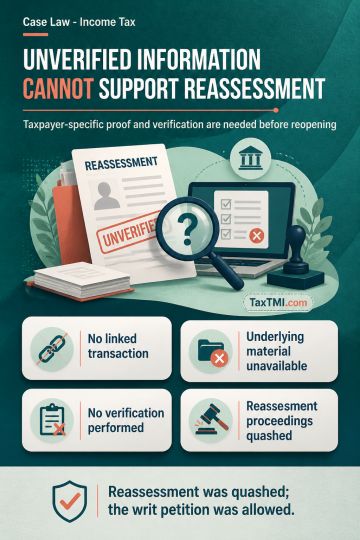
Unverified Insight Portal Information Cannot Justify Reassessment Without a Verified Taxpayer-Specific Income-Escape Nexus or Demonstrated Application...
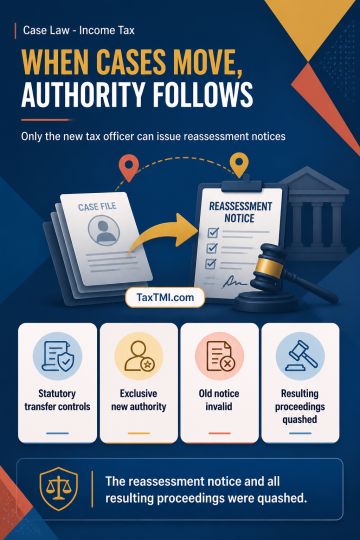
Assessing Officer jurisdiction after statutory transfer invalidates reassessment notices issued by transferor officers and nullifies resulting proceed...
Page of 4883
Press 'Enter' after typing page number.
261 to 280 of 97649 Results
❮
❯
❯❯
0 / 200
Expand Note
Add to Folder
No Folders have been created
+
Are you sure you want to delete "My most important" ?
HC dismissed the writ petition and held it premature and not maintainable, directing the petitioner to pursue the statutory remedy under Section 107 rather than relief under Article 226. The court recorded that where a proper officer (not below Joint Commissioner) has reasons to believe under Section 67 of suppression or evasion, he may inspect, search and, under Section 69, arrest, and seize documents; thereafter a notice under Section 73 (three-year limitation) or Section 74 (five-year limitation) may be issued. The court refused to examine the correctness of issuance of a Section 74 notice at writ stage, leaving the limitation and merits to the adjudicatory authority; observations of the HC are not to influence the proper officer.
HC dismissed the writ petition and held it premature and not maintainable, directing the petitioner to pursue the statutory remedy under Section 107 rather than relief under Article 226. The court recorded that where a proper officer (not below Joint Commissioner) has reasons to believe under Section 67 of suppression or evasion, he may inspect, search and, under Section 69, arrest, and seize documents; thereafter a notice under Section 73 (three-year limitation) or Section 74 (five-year limitation) may be issued. The court refused to examine the correctness of issuance of a Section 74 notice at writ stage, leaving the limitation and merits to the adjudicatory authority; observations of the HC are not to influence the proper officer.
Note: It is a system-generated summary and is for quick reference only.
 TaxTMI
  TaxTMI
 of 4883