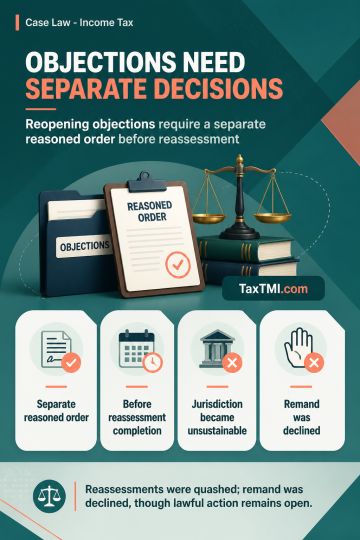
Separate speaking orders on reopening objections are mandatory; deciding them within reassessment invalidates jurisdiction and precludes revival of st...
ITAT set aside additions under s.69A treating unsecured loans as unexplained money and allowed the assessee's appeal. The Tribunal found that the assessee furnished creditor details, ITR acknowledgements, accounts, bank statements and confirmations, and complied with s.133(6) and s.131 summonses, thereby discharging the initial onus; the burden accordingly shifted to the revenue, which failed to controvert or impugn the documents or point to any material defect. The AO's treatment of raised unsecured loans as unexplained cash was held contrary to the statutory scope of s.69A and the CIT(A)'s confirmation of that view was reversed.
ITAT set aside additions under s.69A treating unsecured loans as unexplained money and allowed the assessee's appeal. The Tribunal found that the assessee furnished creditor details, ITR acknowledgements, accounts, bank statements and confirmations, and complied with s.133(6) and s.131 summonses, thereby discharging the initial onus; the burden accordingly shifted to the revenue, which failed to controvert or impugn the documents or point to any material defect. The AO's treatment of raised unsecured loans as unexplained cash was held contrary to the statutory scope of s.69A and the CIT(A)'s confirmation of that view was reversed.
Note: It is a system-generated summary and is for quick reference only.
 TaxTMI
  TaxTMI
 of 4893