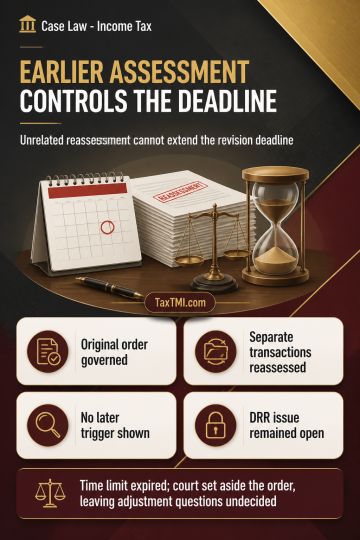
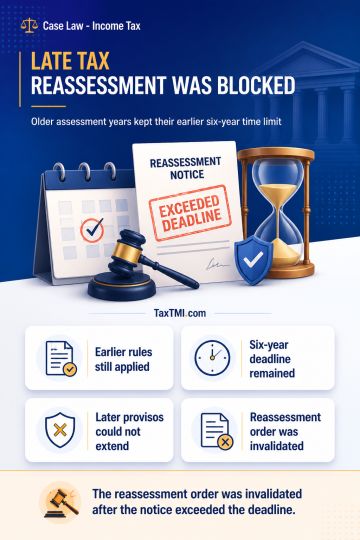
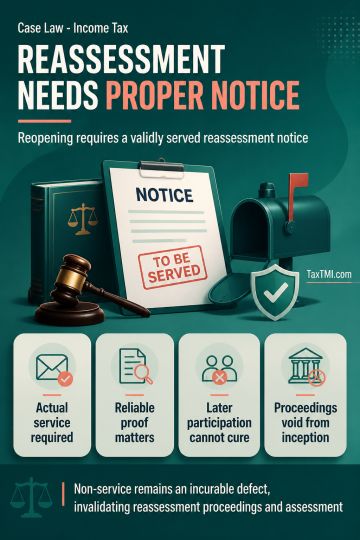
Pre-amendment reassessment limitation bars late notices under the preserved regime, invalidating consequential reassessment for affected earlier asses...
Cash-sales explanations for bank deposits require documentary reconciliation; reassessment notice survived where effective response time was available...
Functional comparability in transfer pricing prevents ad hoc arm's length adjustments where functions, assets, risks and reliable comparables are unes...
ITAT held that where the payee has declared the receipts and discharged tax liability, the payer cannot be treated as an assessee in default under s.201/201(1A); the AO must first ascertain default before invoking disallowance. Applying this principle, the Tribunal found the taxpayer's contract involved a 4% supervision margin payable to the contractor for construction of an institutional facility and, given the charitable context and non-commencement of the project, afforded the assessee the benefit of doubt. The AO was directed to treat only the 4% margin as fees chargeable under s.194J. Other administrative and allied payments were sustained. Grounds were accordingly partly allowed.
ITAT held that where the payee has declared the receipts and discharged tax liability, the payer cannot be treated as an assessee in default under s.201/201(1A); the AO must first ascertain default before invoking disallowance. Applying this principle, the Tribunal found the taxpayer's contract involved a 4% supervision margin payable to the contractor for construction of an institutional facility and, given the charitable context and non-commencement of the project, afforded the assessee the benefit of doubt. The AO was directed to treat only the 4% margin as fees chargeable under s.194J. Other administrative and allied payments were sustained. Grounds were accordingly partly allowed.
Note: It is a system-generated summary and is for quick reference only.
 TaxTMI
 TaxTMI

 of 4918