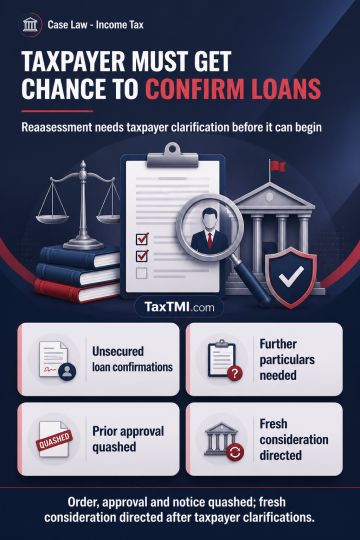
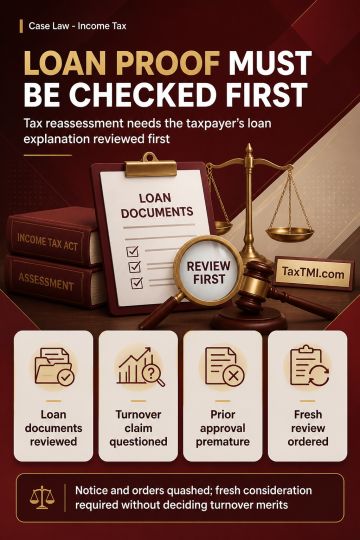
Opportunity to furnish unsecured-loan confirmations is required before reassessment initiation; proceedings require fresh consideration after taxpayer...
Under-reporting on a first reassessment return attracts penalty, while enhanced misreporting penalty requires proof of a statutory misreporting catego...
ITAT allowed the appeal and set aside the transfer pricing...
Appeal allows set-aside of transfer pricing adjustment imputing notional interest on integrated intercompany receivables after net margin exceeded comparables
Contents
Summary
Note
Bookmark
Share
✓ Copied successfully !
Print
Print Options
For full text, please login
Login to TaxTMI
Verification Pending
The Email Id has not been verified. Click on the link we have sent on
ITAT allowed the appeal and set aside the transfer pricing adjustment imputing notional interest on intercompany receivables. The Tribunal held the receivable balances arise from integrated commercial transactions and cannot be treated as independent standalone loans; after excluding imputed interest the taxpayer's net margin exceeded the comparable mean, negating any adverse TP adjustment. The Tribunal noted uniform non-charging of interest, the appellant's debt-free status and absence of actual interest expense, and that working-capital adjustments in comparables already account for receivable effects. The use of an inflated LIBOR-plus mark-up to compute interest on short-period receivables was held unjustified, and the grounds of appeal were allowed.
ITAT allowed the appeal and set aside the transfer pricing adjustment imputing notional interest on intercompany receivables. The Tribunal held the receivable balances arise from integrated commercial transactions and cannot be treated as independent standalone loans; after excluding imputed interest the taxpayer's net margin exceeded the comparable mean, negating any adverse TP adjustment. The Tribunal noted uniform non-charging of interest, the appellant's debt-free status and absence of actual interest expense, and that working-capital adjustments in comparables already account for receivable effects. The use of an inflated LIBOR-plus mark-up to compute interest on short-period receivables was held unjustified, and the grounds of appeal were allowed.
Note: It is a system-generated summary and is for quick reference only.
 TaxTMI
  TaxTMI
 of 4916