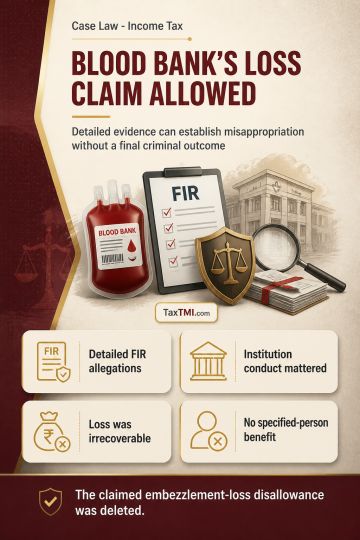
Embezzlement losses in charitable institutions remain allowable when misappropriation is established, irrecoverable, and not a specified-person benefi...
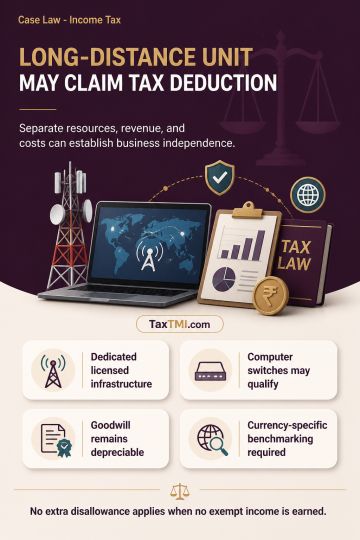
National long-distance undertaking status supports deduction where separately licensed infrastructure, resources, revenue, and expenditure establish c...
Agency reimbursement income follows contractual deposit-liability computation, while pending deposit collections do not constitute deemed-dividend loa...
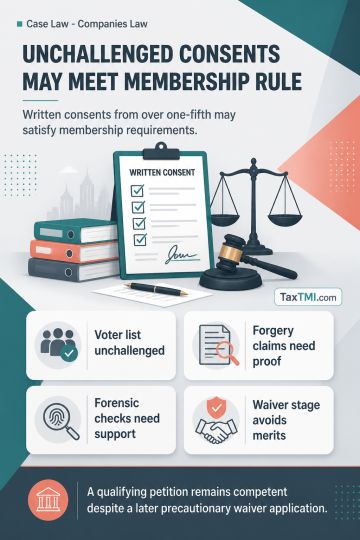
Membership-consent thresholds for oppression petitions are satisfied by unchallenged voter-list consents, while unsupported forgery claims require pro...
The HC held that the rectification applications under Section 161 were improperly employed to recall an order allowing the petitioner's appeal; such relief cannot substitute for the statutory appellate remedy. The court found no error apparent on the face of the record warranting rectification, as the impugned orders required substantive examination rather than a manifest clerical mistake. Consequently the rectification orders were quashed, the order allowing the appeal was restored, and the petition was allowed. The HC emphasized that an aggrieved party must pursue the prescribed statutory remedy rather than seek recall via Section 161.
The HC held that the rectification applications under Section 161 were improperly employed to recall an order allowing the petitioner's appeal; such relief cannot substitute for the statutory appellate remedy. The court found no error apparent on the face of the record warranting rectification, as the impugned orders required substantive examination rather than a manifest clerical mistake. Consequently the rectification orders were quashed, the order allowing the appeal was restored, and the petition was allowed. The HC emphasized that an aggrieved party must pursue the prescribed statutory remedy rather than seek recall via Section 161.
Note: It is a system-generated summary and is for quick reference only.
 TaxTMI
  TaxTMI
 of 4881