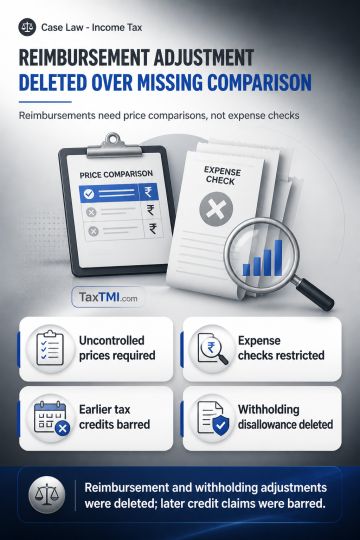
Transfer-pricing reimbursement adjustments require uncontrolled comparables and cannot become expense-genuineness reviews, resulting in deletion of th...
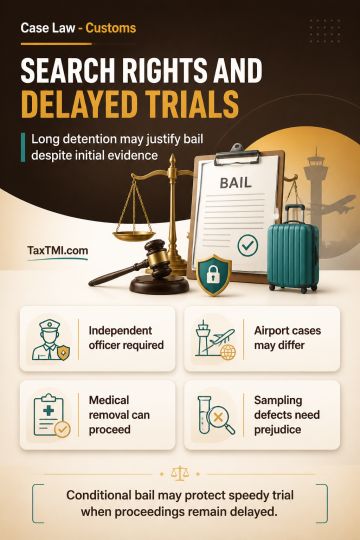
Food import sampling requirements support provisional release where unseized consignments conform to standards and raw areca classification is unestab...
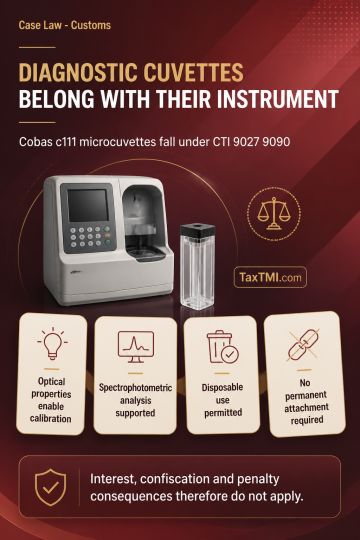
Diagnostic microcuvette classification follows sole-use analytical function, placing specialised disposable cuvettes with their analyser rather than g...
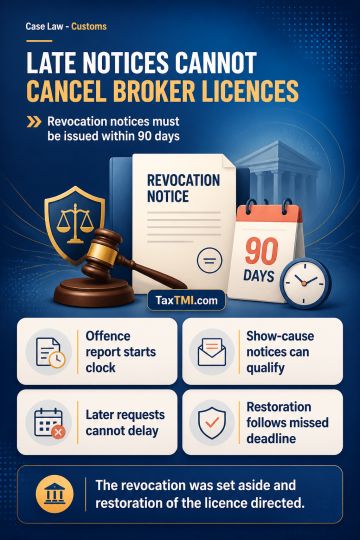
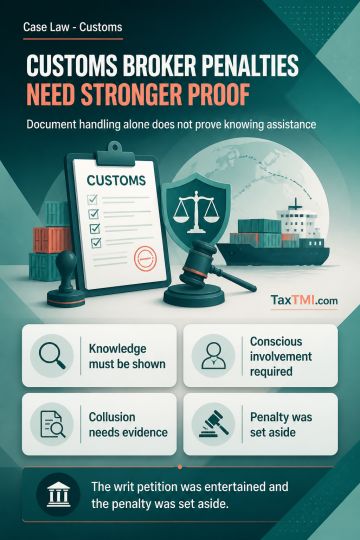
Customs Broker licensing proceedings fail when their offence-report foundation collapses and authorisation, advisory, and KYC duties remain unbreached...
Page of 4891
Press 'Enter' after typing page number.
501 to 520 of 97820 Results
❮
❯
❯❯
0 / 200
Expand Note
Add to Folder
No Folders have been created
+
Are you sure you want to delete "My most important" ?
ITAT allowed the appeal of the assessee, holding that the Finance Act, 2022 amendment removing the additional one-year post five-year utilisation window cannot be applied retrospectively to existing accumulations. Applying the doctrine lex non cogit ad impossibilia, the Tribunal found that retrospective application would render utilisation impossible and produce an absurd outcome. The Tribunal followed precedent treating the amendment as prospective for fresh accumulations from 1-4-2022, and upheld that accumulations arising in FY 2016-17 and FY 2017-18 remained governed by the pre-amendment six-year window (with deadlines of 31-3-2023 and 31-3-2024 respectively). Consequently, additions for those accumulations were deleted.
ITAT allowed the appeal of the assessee, holding that the Finance Act, 2022 amendment removing the additional one-year post five-year utilisation window cannot be applied retrospectively to existing accumulations. Applying the doctrine lex non cogit ad impossibilia, the Tribunal found that retrospective application would render utilisation impossible and produce an absurd outcome. The Tribunal followed precedent treating the amendment as prospective for fresh accumulations from 1-4-2022, and upheld that accumulations arising in FY 2016-17 and FY 2017-18 remained governed by the pre-amendment six-year window (with deadlines of 31-3-2023 and 31-3-2024 respectively). Consequently, additions for those accumulations were deleted.
Note: It is a system-generated summary and is for quick reference only.
 TaxTMI
  TaxTMI
 of 4891