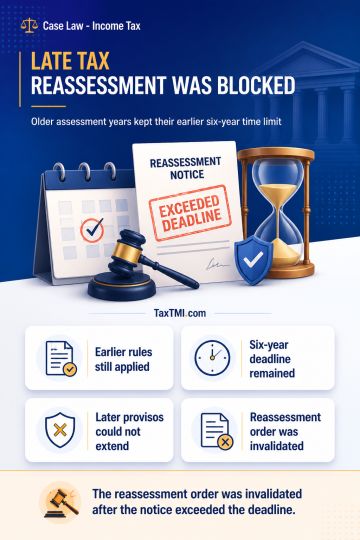
Pre-amendment reassessment limitation bars late notices under the preserved regime, invalidating consequential reassessment for affected earlier asses...
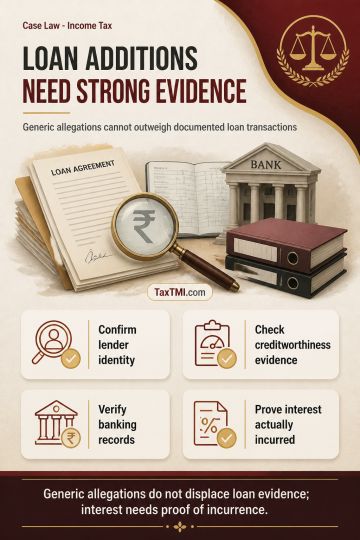
Cash-sales explanations for bank deposits require documentary reconciliation; reassessment notice survived where effective response time was available...
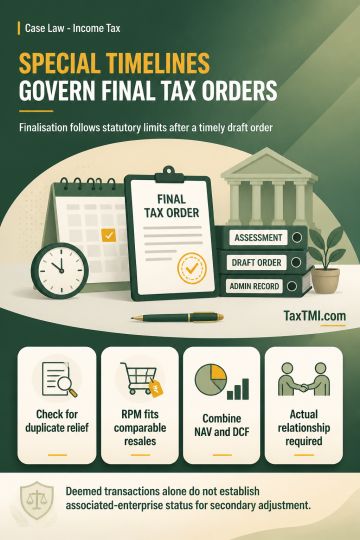
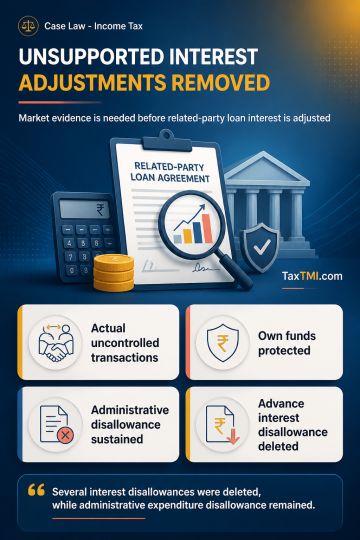
Functional comparability in transfer pricing prevents ad hoc arm's length adjustments where functions, assets, risks and reliable comparables are unes...
ITAT held the assessment passed against a non-existent entity...
Assessment against non-existent entity held void ab initio; successor allowed modified return under s.170A, s.68 additions disallowed and s.80IA allowed
Contents
Summary
Note
Bookmark
Share
✓ Copied successfully !
Print
Print Options
For full text, please login
Login to TaxTMI
Verification Pending
The Email Id has not been verified. Click on the link we have sent on
ITAT held the assessment passed against a non-existent entity void ab initio and allowed the assessee's grounds, observing that post-amendment s.170A (w.e.f. 01.04.2022) permits a successor to file a modified return and non-registration of successorship on the portal is immaterial; therefore additions under s.68 were disallowed. The Tribunal allowed s.80IA deduction of Rs.21.32 crore (of Rs.22.99 crore) on factual review of commencement records, and found taxing advances in the impugned year would impermissibly result in double taxation. Additions treating long-outstanding sundry creditors as income were also set aside. The CIT(A)/NFAC order is vacated and the assessee's appeals are allowed.
ITAT held the assessment passed against a non-existent entity void ab initio and allowed the assessee's grounds, observing that post-amendment s.170A (w.e.f. 01.04.2022) permits a successor to file a modified return and non-registration of successorship on the portal is immaterial; therefore additions under s.68 were disallowed. The Tribunal allowed s.80IA deduction of Rs.21.32 crore (of Rs.22.99 crore) on factual review of commencement records, and found taxing advances in the impugned year would impermissibly result in double taxation. Additions treating long-outstanding sundry creditors as income were also set aside. The CIT(A)/NFAC order is vacated and the assessee's appeals are allowed.
Note: It is a system-generated summary and is for quick reference only.
 TaxTMI
 TaxTMI

 of 4918