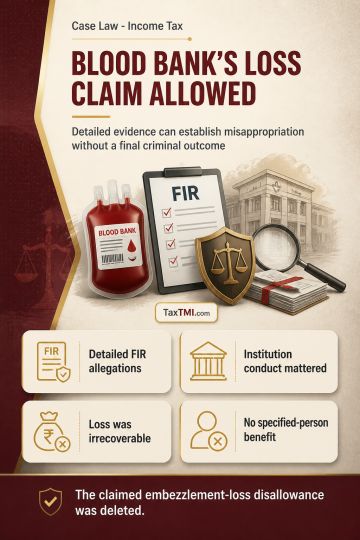
Embezzlement losses in charitable institutions remain allowable when misappropriation is established, irrecoverable, and not a specified-person benefi...
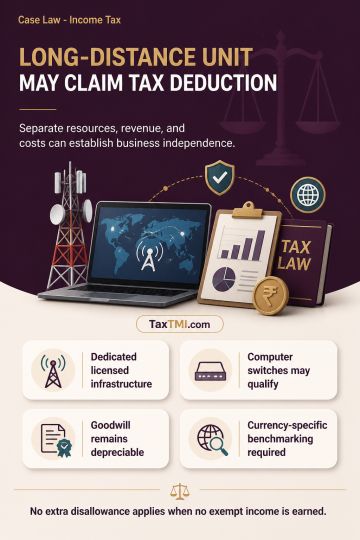
National long-distance undertaking status supports deduction where separately licensed infrastructure, resources, revenue, and expenditure establish c...
Agency reimbursement income follows contractual deposit-liability computation, while pending deposit collections do not constitute deemed-dividend loa...
Membership-consent thresholds for oppression petitions are satisfied by unchallenged voter-list consents, while unsupported forgery claims require pro...
The HC dismissed the writ petition challenging the impugned order alleging fraudulent availment of Input Tax Credit (ITC) by multiple parties. The Court noted that the Petitioner's reply to the show cause notice (SCN) may not have been duly considered, raising a potential natural justice issue. However, given the complexity involving numerous transactions and multiple noticees, the Court held that detailed factual examination is inappropriate under writ jurisdiction. The Court emphasized that the Petitioner should pursue statutory appellate remedies instead of seeking relief via writ petition. Consequently, the petition was dismissed without adjudicating the merits of the alleged fraudulent ITC claims or penalties imposed.
The HC dismissed the writ petition challenging the impugned order alleging fraudulent availment of Input Tax Credit (ITC) by multiple parties. The Court noted that the Petitioner's reply to the show cause notice (SCN) may not have been duly considered, raising a potential natural justice issue. However, given the complexity involving numerous transactions and multiple noticees, the Court held that detailed factual examination is inappropriate under writ jurisdiction. The Court emphasized that the Petitioner should pursue statutory appellate remedies instead of seeking relief via writ petition. Consequently, the petition was dismissed without adjudicating the merits of the alleged fraudulent ITC claims or penalties imposed.
Note: It is a system-generated summary and is for quick reference only.
 TaxTMI
  TaxTMI
 of 4888