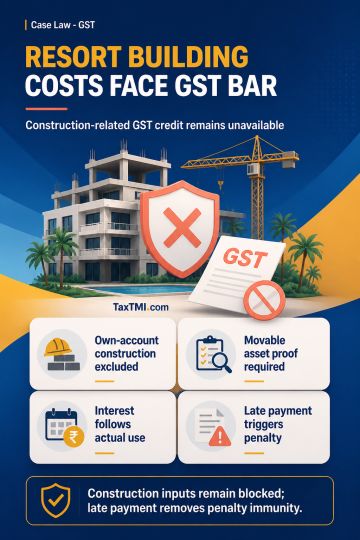
Blocked input tax credit for resort construction remains unavailable; interest follows actual utilisation, while delayed payment attracts statutory pe...
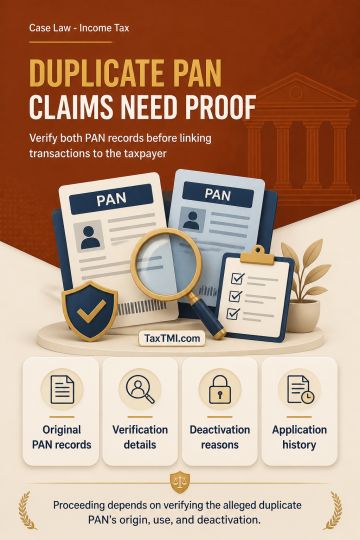
Duplicate PAN allocation requires record verification and deactivation reasons before assessment-related transactions can be attributed to an assessee...
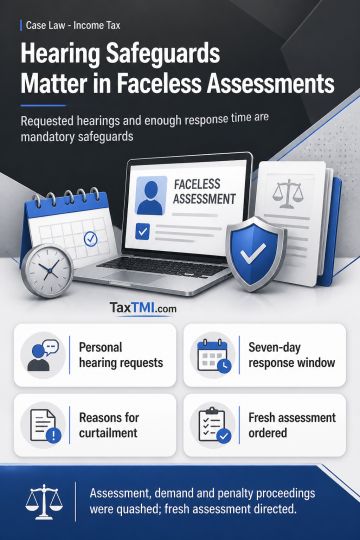
Faceless assessment safeguards require requested personal hearings and adequate final show-cause response time, failing which reassessment is required...
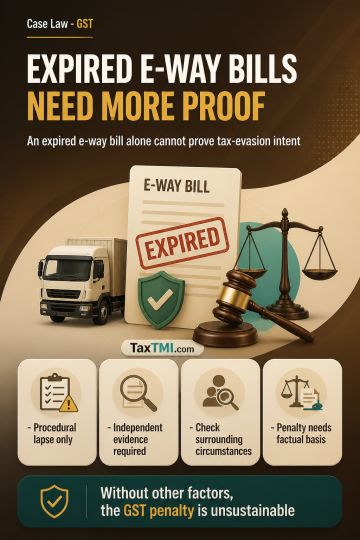
The HC upheld the levy of penalty under Section 129(1)(b) of the GST Act for transit of goods without an e-way bill, finding no evidence of technical error or inadvertence, as no e-way bill was generated prior to movement. The presence of a tax invoice with the goods established the petitioner as the owner, and the temporary suspension of the purchaser's registration during transit did not adversely affect liability. The Court relied on precedent attributing an intent to evade tax in absence of an e-way bill at inspection, validating the penalty order. However, the Court modified the impugned orders, directing that proceedings be treated under Section 129(1)(a) instead of 129(1)(b), as the requisite documents accompanied the consignment. The writ petition was allowed in part, with no further interference to the penalty order.
The HC upheld the levy of penalty under Section 129(1)(b) of the GST Act for transit of goods without an e-way bill, finding no evidence of technical error or inadvertence, as no e-way bill was generated prior to movement. The presence of a tax invoice with the goods established the petitioner as the owner, and the temporary suspension of the purchaser's registration during transit did not adversely affect liability. The Court relied on precedent attributing an intent to evade tax in absence of an e-way bill at inspection, validating the penalty order. However, the Court modified the impugned orders, directing that proceedings be treated under Section 129(1)(a) instead of 129(1)(b), as the requisite documents accompanied the consignment. The writ petition was allowed in part, with no further interference to the penalty order.
Note: It is a system-generated summary and is for quick reference only.
 TaxTMI
  TaxTMI
 of 4888